
Standing atop a hill at sunset, watching the golden light spill over endless boulders and centuries old ruins, it felt like I had stepped into a world untouched by time. In that moment, I realized this wasn’t just another destination it was a story waiting to be explored. I still remember a foreign traveler approaching me during a quiet sunset in Hampi and asking, “Is there a good Hampi travel guide that truly captures this place?”
For a moment, I didn’t answer him. Instead, I looked out at the vast landscape and the ancient ruins scattered among towering boulders, temples standing silently as they had for centuries, and the soft glow of sunset bringing everything to life. Under this evening light, I realized that Hampi isn’t something you can fully understand through a simple checklist. “You don’t just visit Hampi, you experience it” I finally said. And if you’re searching for a Hampi travel guide that captures that feeling the history, the stillness, and the stories hidden in every corner then my dear reader you are at the right place.
The Mythological Origins of Hampi: Tracing the Birth of a Historic City
Mythology, Legends & Sacred Origins
Long before Hampi became the UNESCO World Heritage site and a landscape of ruins that it is today, it is believed that this sacred land had originated during the Satya Yuga in the divine’s presence. The sacred and mythological stories surrounding Hampi are carved out in its stones. This Hampi Travel Guide has tried to capture the very essence of the Town.
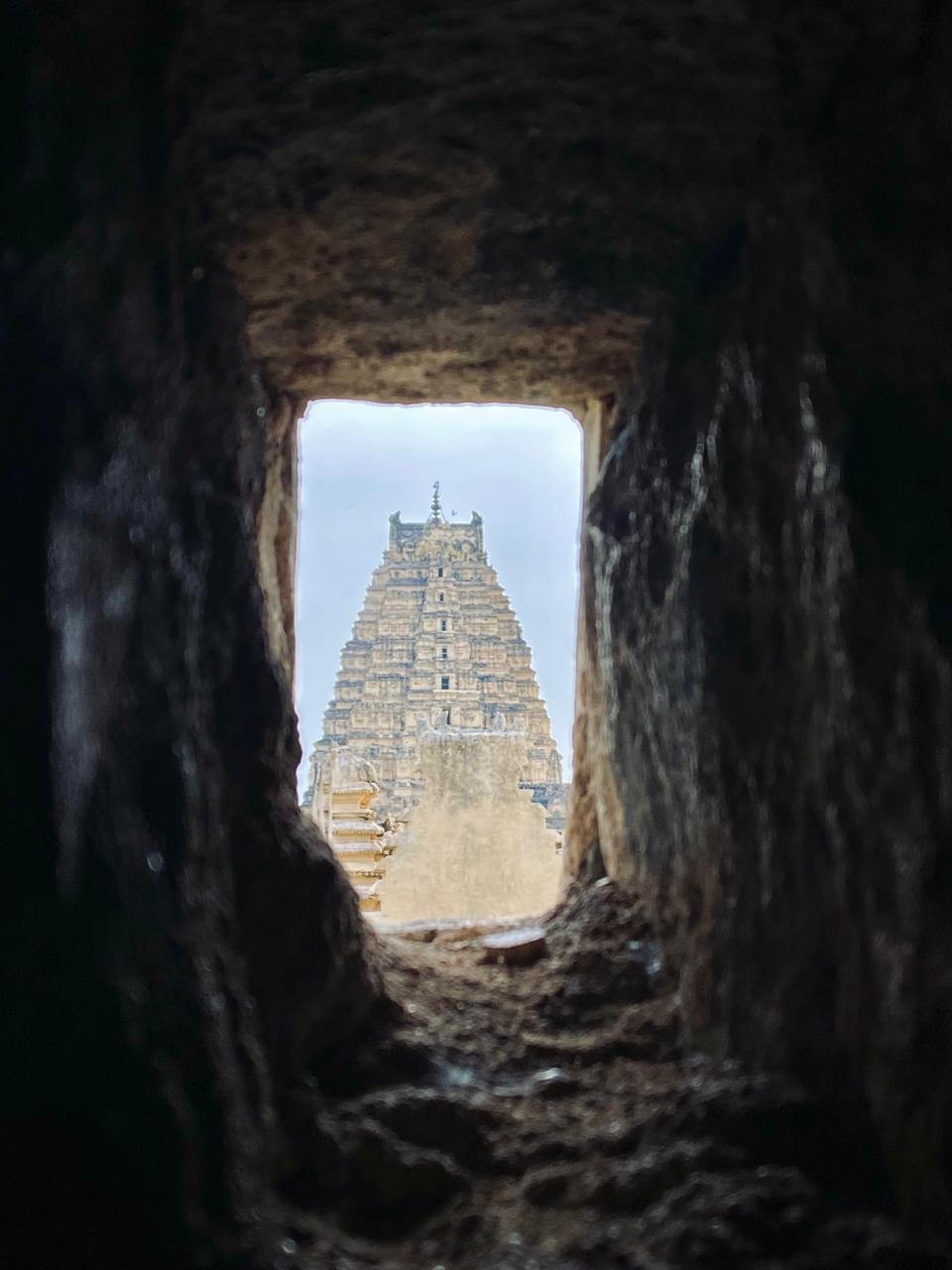
1) The Legend of Girija Kalyana: A Love That Shaped a Sacred Land
According to the Hindu mythology and the stalapuranas (temple legends), the genesis of the sacred town of Hampi is deeply rooted in the union of Lord Shiva and Goddess Pampa (incarnation of Goddess Parvati). This powerful legend is known in the local traditions as Girija Kalyana. The sacred text of Pampa Mahatme, credited to OM Siddlingeshwar Swamiji, the legend begins with Goddess Parvati, who was once cursed by Lord Shiva to be born on earth as the daughter of Daksha and that Lord Shiva will come as Lord Virupaksha to marry her.
Upon birth, Goddess Parvati was named as Dakshayini and from a young age, she worshipped Lord Shiva and was captivated by his stories, his ascetic life, and his cosmic power.
Once Sage Narada visited Daksha and Dakshayini (Goddess Parvati) in her earthly form. Impressed with Dakshayini’s worship and deep interest in Lord Shiva, Sage Narada revealed to both mother and daughter about Dakshayini’s true destiny. He also informed them that Lord Shiva himself had descended to earth as Lord Virupaksha and was deep in penance on the nearby sacred Hemakuta Hill. He further advised Dakshayini (Goddess Parvati) that if she wished to unite with Lord Virupaksha (Lord Shiva), she would have to undertake intense tapasya (penance) and showcase her unwavering determination and devotion towards him.
Upon the advise of Sage Narada, King Parvatha along with his daughter Dakshayini, reached Hemakuta Hill, where Dakshayini continued her worship to Lord Shiva. From there, Dakshayini journeyed to sacred waters of Pampa Sarovara and continued her tapasya. There, she performed severe tapasya with meditating, praying, and dedicating herself entirely to Lord Shiva. Over time, she came to be known as Pampamma or Pampaambika, forever linking her identity to this land.
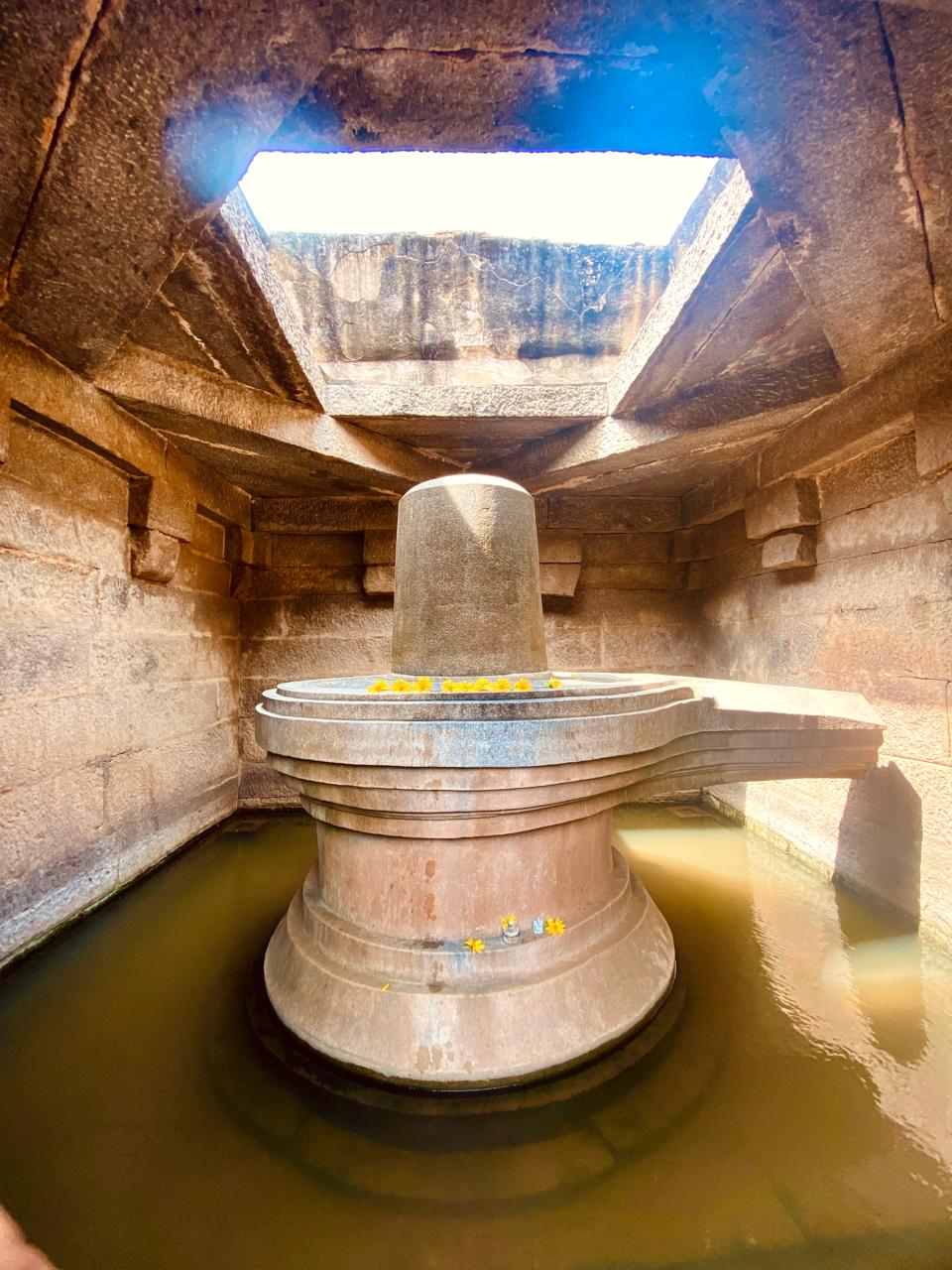
The Turning Point: Manmatha’s Sacrifice
As this divine story unfolded, the gods paralelly faced a growing threat from the demon Tarakasura. Lord Brahma along with Lord Indra and the other Gods approached Lord Vishnu for help, who advised that demon Tarakasura could only be defeated by the son of Lord Shiva. Lord Vishnu further advised that Lord Shiva needs to marry Pampamma for which his tapasya needs to be broken.
To awaken Lord Shiva, Lord Vishnu decided to send his own son Manmatha, the god of love, to break Lord Shiva’s penance. Manmatha initially objected to this request out of fear of Lord Shiva but eventually had to obey his father’s orders. Accordingly, Manmatha reached Hemakuta Hills and met Goddess Parvati, who took him to Lord Virupaksha, who was under deep tapasya. With trembling resolve, Manmatha aimed his first flower-tipped arrow at Shiva’s heart. As there was no reaction from Lord Shiva, Manmatha took five flower-tipped arrow and aimed at Shiva’s heart.
This time Lord Shiva’s penance was broken and Lord Shiva, being disturbed from his meditation, opened his third eye in fury and reduced Manmatha to ashes. Legend says that even the rock behind Manmatha burned and a pond was formed, what is now named as Manmatha Kunda. Soon after, Lord Virupaksha returned back to his tapasya without noticing Goddess Pampamma.
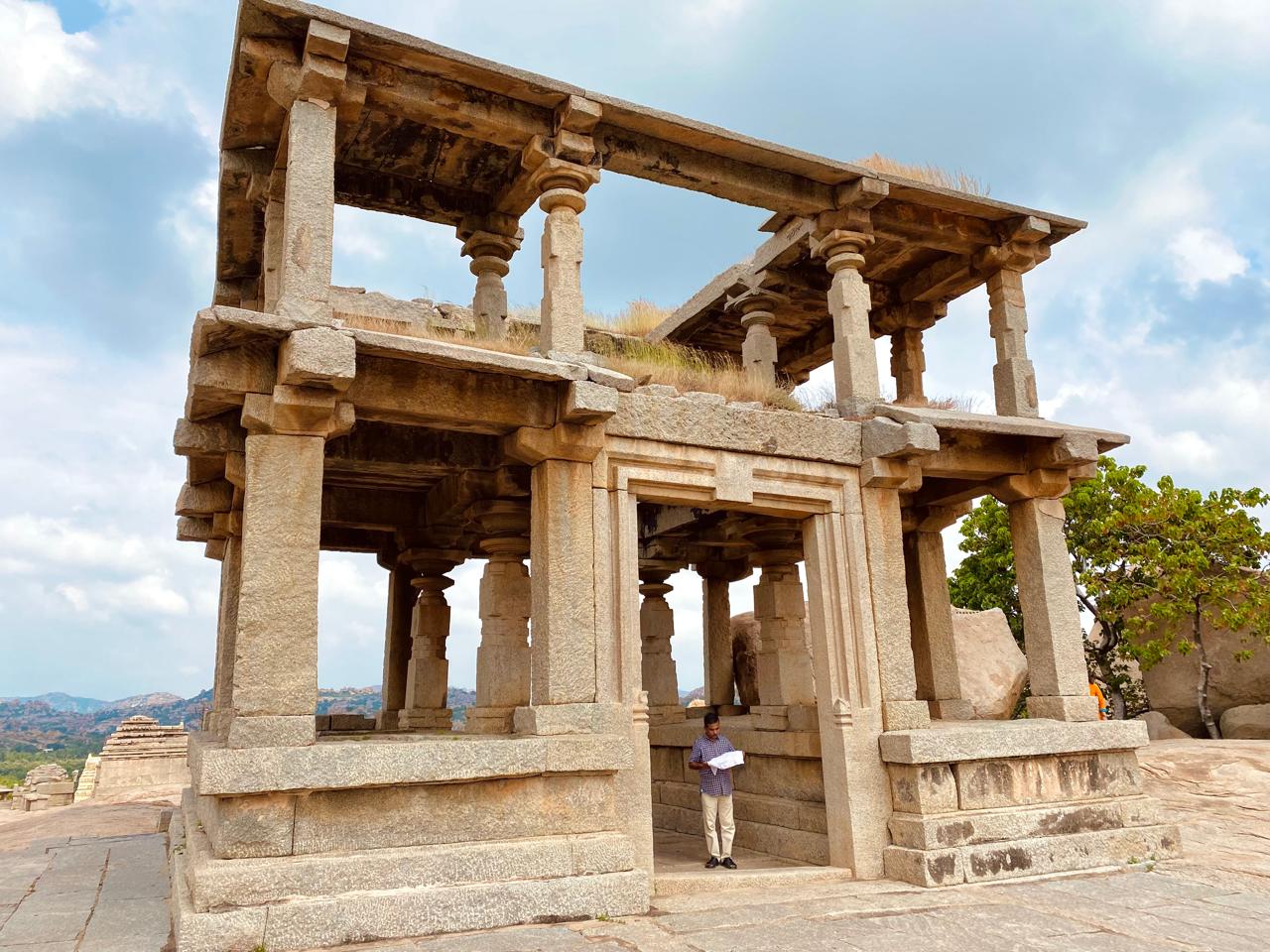
Penance, Compassion, and Divine Union
The destruction of Manmatha had left his wife Rathi in deep sorrow. She approached several gods for help and lastly turned to Goddess Pampamma for help. The goddess was overcome with compassion and guilt. Determined to restore balance, Goddess Pampaambika undertook even deeper penance but this time not just for her love, but for the restoration of Manmatha himself.
Years passed but Goddess Pampaambika’s determination and devotion was absolute. Finally, Lord Shiva appeared before the Goddess at the sacred lake of Pampa Sarovara. Moved by Goddess’s unwavering devotion and determination towards him, Lord Shiva asked for and immediately granted her wishes, which were, Restoration of Manmatha, and Marriage of Lord Shiva with Goddess Pampaambika.
The Divine Wedding That Lives On
In a grand celestial event, Lord Shiva accompanied by gods like Brahma and Vishnu, along with their respective wife Goddess Saraswathi and Goddess Lakshmi and accompanied by sages, Nandi and divine beings, arrived to seek Pampa’s hand from her father, Himavantha. Thereafter, their union, known as Girija Kalyana, was celebrated as a cosmic wedding, in presence of all the Gods, sages, devas and all creatures, one that symbolized the balance of creation itself.
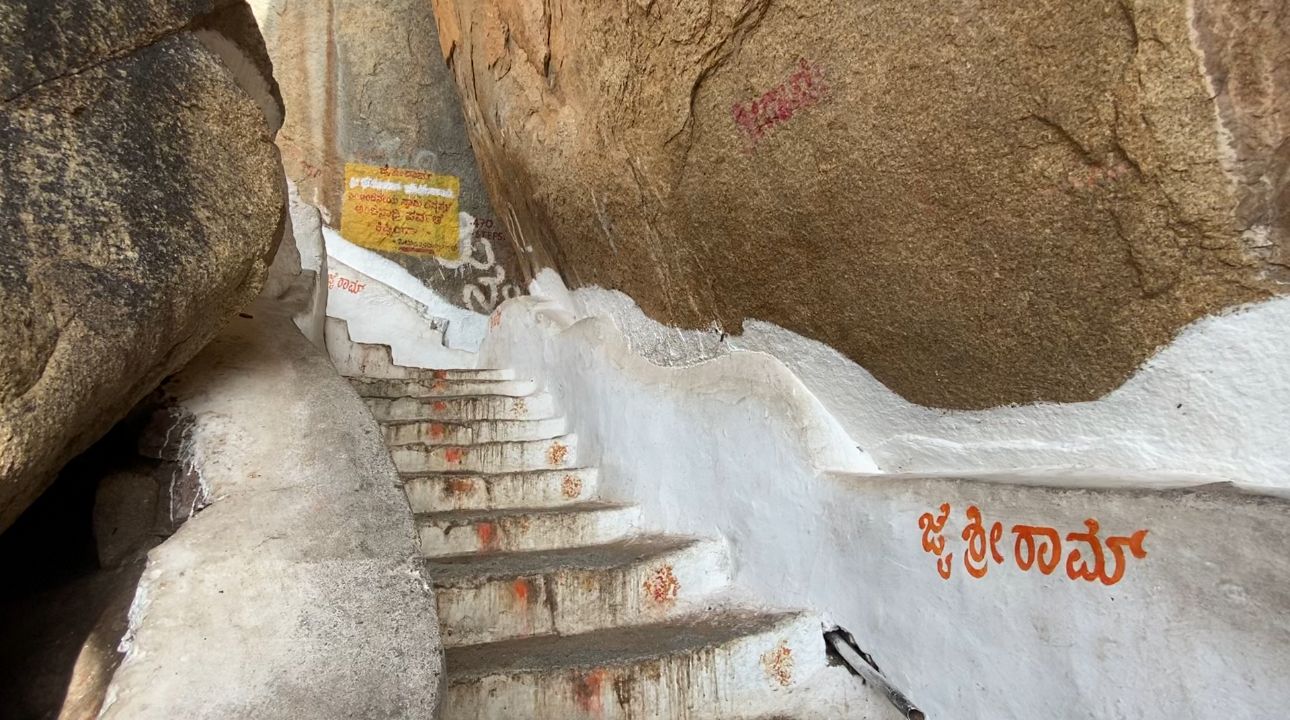
It is believed that this divine marriage sanctified the land of Hampi, giving it spiritual significance that continues to this day. This union has giving rise to a sacred settlement that would, over centuries, evolve into what we now know as Hampi. Even now, rituals like the Phala Pooje are said to echo this ancient wedding, keeping the legend alive through generations. Did any other Hampi Travel Guide tell you this?
Even the name “Hampi” is thought to be derived from “Hampe,” the Kannada adaptation of “Pampa,” reflecting the deep-rooted connection between the place and the goddess.
Credibility and Source Note:
The Girija Kalyana narrative is primarily drawn from:
- “Shri Pampa Mahatme” by Siddlingeshwar Swamiji (regional spiritual-literary text).
- Local oral traditions and temple narratives around Virupaksha Temple.
⚠️ Note for authenticity:
This story is mythological and literary in nature, not strictly historical, but it plays a crucial role in understanding the cultural and spiritual identity of Hampi.
2) Hampi in the Ramayana: The Land of Kishkindha
The identity of Hampi is solidified in Ramayana as written by Sage Valmiki. The very landscape of Hampi is believed to be the legendary kingdom of Kishkindha i.e. the kingdom of monkeys. Several ancient texts refers to this region as Pampa-kshetra, Kishkindha-kshetra, and Bhaskara-kshetra due to its close association with the Tungabhadra River.
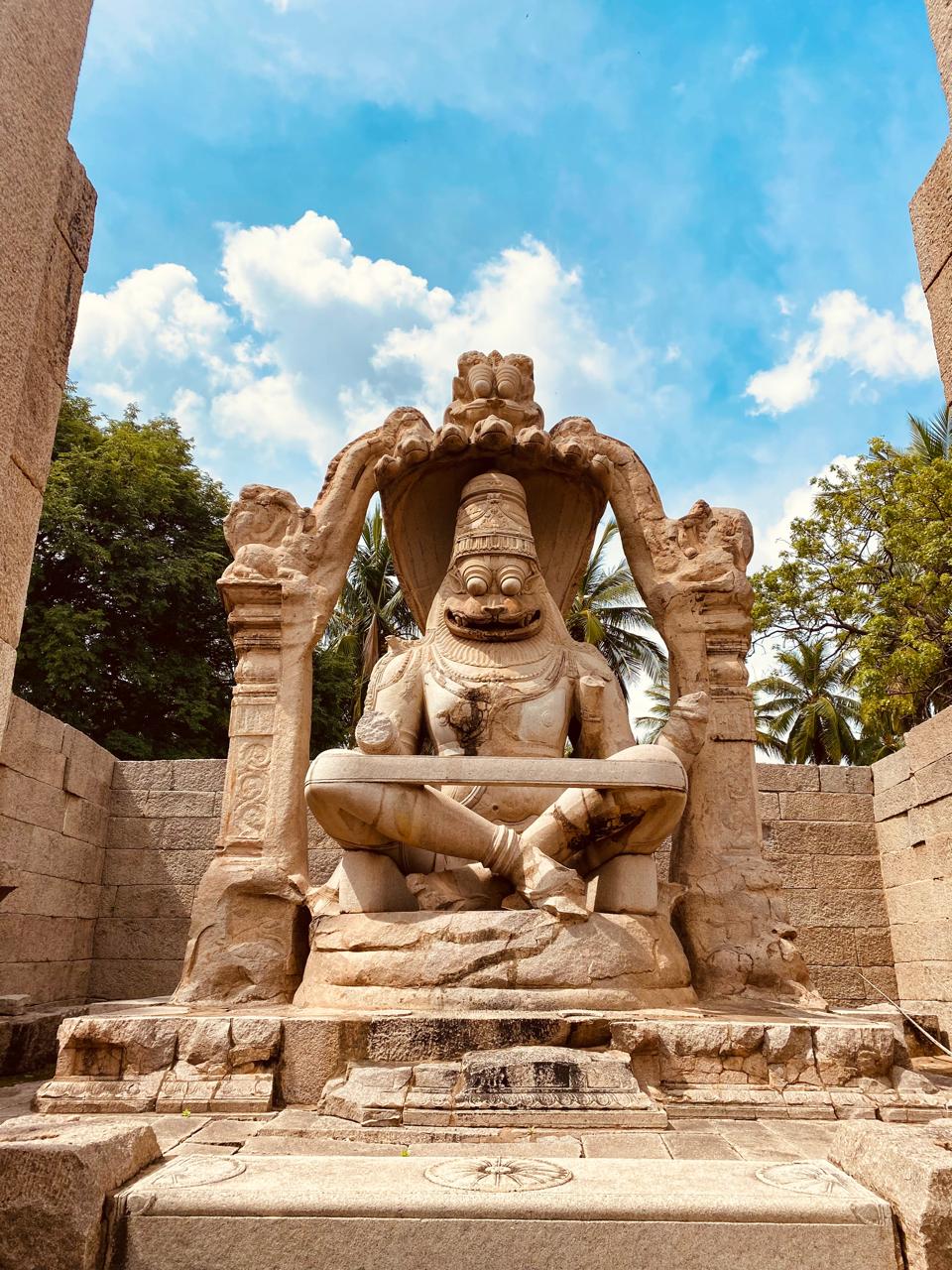
According to Ramayana, Lord Rama and his brother Lakshmana had arrived at Kishkindha during their exile in their search for Sita, who had been abducted by Lord Ravana. Watching them from a distance was Lord Hanuman. Disguised as a sage, Lord Hanuman approached Lord Rama and his brother Lakshmana and spoke with remarkable wisdom and humility. That meeting went on to change the course of the Epic Story of Ramayana forming the most powerful alliances in the history.
Lord Rama and Lakshmana met Sugriva, through Lord Hanuman and a promise was made that Rama would help Sugriva reclaim his kingdom, and in return, Sugriva would aid in the search for Sita. True to his word, Lord Rama confronted Vali, bringing an end to his reign and restoring Sugriva to the throne of Kishkindha. Thereafter, Sugriva’s vast army of vanaras (Monkeys) was sent in all directions, marking the beginning of the great search for Sita.
Why does Ramayana seem to form such an integral part of Hampi?
Because the terrain of Hampi and the Tungabhadra River closely mirrors the description of Kishkindha found in the epic. The spots where Lord Rama and Lakshmana lived and visited throughout Kishkinda during their search for Sita shall be covered in this Hampi Travel Guide, including the Birthplace of Lord Hanuman. But dear reader, you do need to know that the sacred and mythological stories surrounding its origin lives in the locals, who fondly share its tales with visitors, ensuring that stories of Hampi are never forgotten.
Empires that shaped the History of Hampi through time
They say that “Rome wasn’t built in a day” True! But neither was Hampi. This 4,187 Hectares of area covered under Hampi today was built over centuries by different dynasties who have lived here for ages. Long before Hampi rose to fame under the Vijayanagara Empire, this land stood as a witness to layers of history which have shaped it into what it is today. This Hampi travel guide has tried to capture the essence of each of the Era to truly learn about the Hampi’s glorious age.
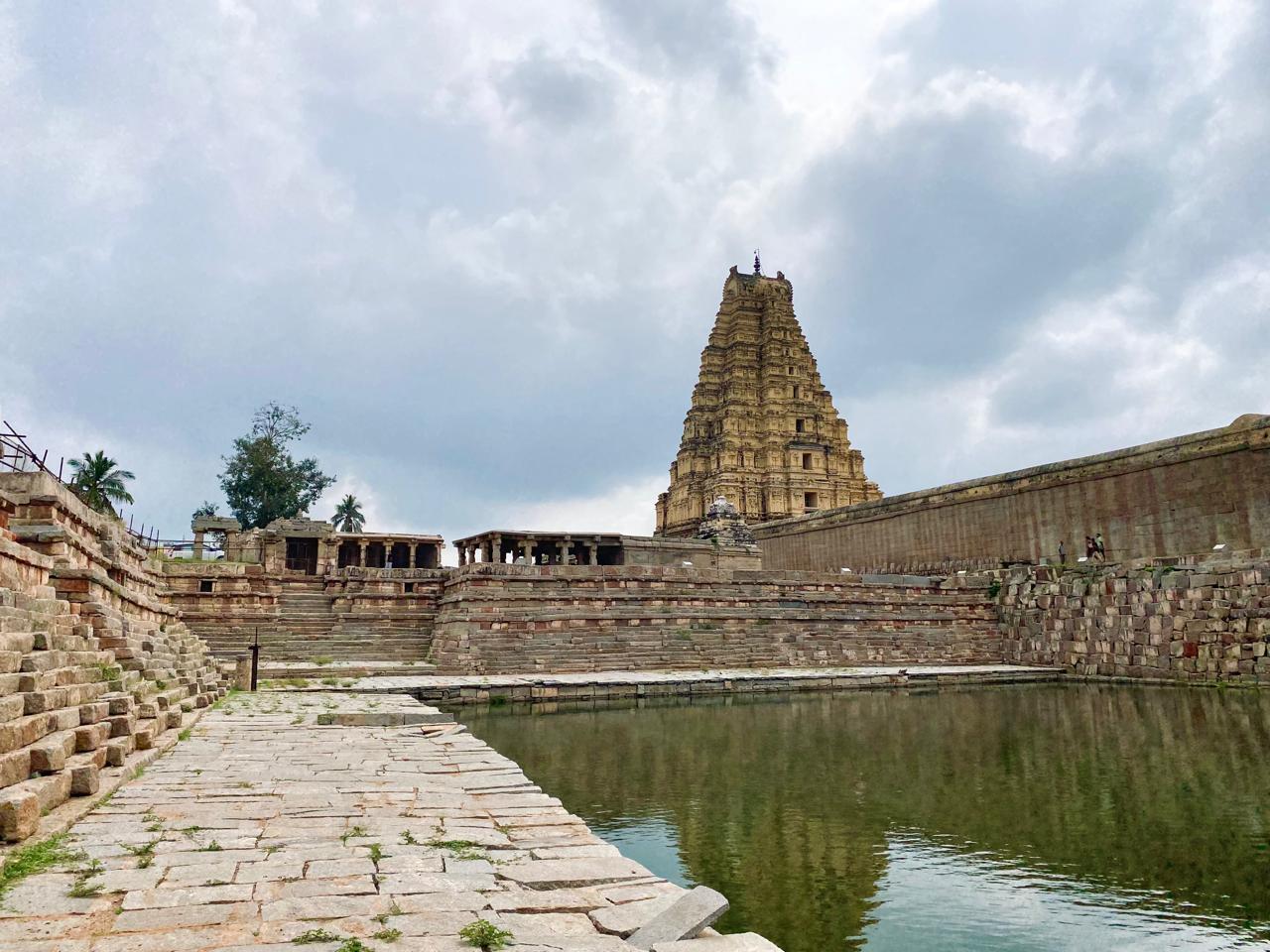
Glimpse of the Glorious Empires
| Sr. No. | Era / Period | Empire | Contribution |
| 1 | 3rd Century BCE | Maurya Empire under Ashoka | Hampi was a vital location for trade and administration. It was a part of the larger imperial network as per the rock edicts in the nearby region |
| 2 | 6th – 8th Century BCE (543CE – 753CE) | Badami Chalukyas (Vatapi) | Introduced structured governance and early temple architecture, laying the cultural foundation of the region. |
| 3 | 10th – 12th Century CE | Kalyana Chalukyas (Western Chalukyas) | Continued architectural development with intricate, soapstone, “Vesara” style temples, and strengthened regional administration. |
| 4 | 12th – 14th Century CE | Hoysala Empire | Served as a foundational military power in the Tungabhadra Region and also known for intricate temple craftsmanship and artistic patronage, enriching the cultural landscape before Vijayanagara. |
| 5 | 14th Century 1336 CE – 1646 CE | Vijayanagara Empire | Transformed Hampi into a grand imperial capital consisting of center of trade, culture, and monumental architecture |
| 6 | 1336 CE – 1485 CE | Sangama Dynasty of the Vijayanagara Empire | Founders of the Vijayanagara Empire who established Hampi as the capital of Vijayanagara |
| 7 | 1485 CE -1505 CE | Saluva Dynasty of the VIjayanagara Empire | Transitional rulers who stabilized the Vijayanagara Empire after decline of Sangama Dynasty during internal challenges |
| 8 | 1505 CE – 1570 CE | Tuluva Dynasty under the Vijayanagara Empire | Peak of Vijayanagara’s power, especially under Krishnadevaraya also called as golden age of art, trade, and expansion. |
| 9 | 1570 CE – 1646 CE | Aravidu Dynasty under the Vijayanagara Empire | Final phase of the Empire marked by gradual decline |
| 10 | Post 1565 CE | Deccan Sultanates (Bijapur & Golconda) | Hampi was destroyed due to Battle of Talikota and it came under shifting control |
| 11 | Later Period | Nayakas & British Rule | Regional control by local rulers followed by British administration, before integration into modern India |
Read More in this Hampi Travel Guide
For readers interested in exploring the historical depth of Hampi and its ruling empires, official resources such as UNESCO’s World Heritage documentation, ASI reports, and the Vijayanagara Research Project provide detailed and reliable insights into the region’s evolution. On top of that here are some official links in this Hampi Travel guide which will help you learn more about each Empire, prior to the Vijayanagar Empire:
1) Learn about the Mauryan Empire & Rock edicts of King Ashoka
2) Badami Chalukyas and Kalyana Chalukyas & Research Papers on Chalukya Dynasty
3) The Hoysala Empire
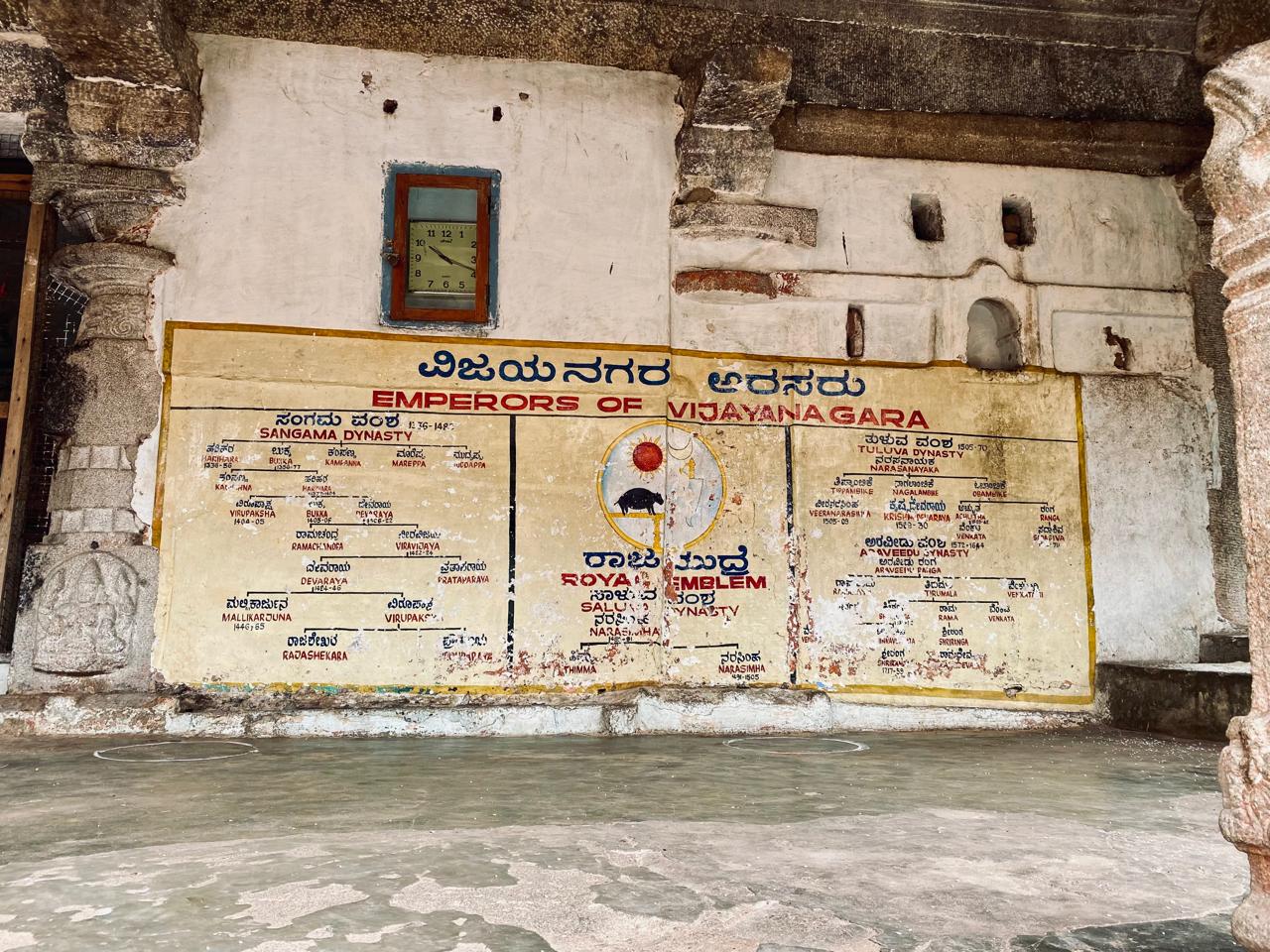
Hampi Under the Vijayanagara Empire: The Rise of a Glorious City
Long before it became a UNESCO World Heritage Site and one of India’s most fascinating historical destinations, Hampi stood at the heart of one of the greatest empires in medieval India viz. the mighty Vijayanagara Empire. Any meaningful Hampi Travel Guide is incomplete without understanding how this surreal landscape of ruins was once transformed into a thriving imperial capital that astonished travelers from across Persia, Portugal, and beyond.
The Vijayanagara Empire was established in 1336 CE by the brothers Harihara I and Bukka Raya I under the spiritual guidance of the sage Vidyaranya. What began as a defensive response to repeated invasions in South India gradually evolved into a powerful empire that controlled vast parts of the Deccan and southern peninsula for over three centuries. Hampi, then known as Vijayanagara, became the political, cultural, spiritual, and economic center of this empire. According to several historical accounts and modern archaeological studies, the city grew into one of the largest urban centers of the medieval world.
What makes this chapter of the Hampi Travel Guide truly fascinating is the extraordinary planning behind the city itself. Unlike ordinary medieval cities, Vijayanagara was designed in harmony with the surrounding landscape. Massive boulder hills acted as natural fortifications, while the Tungabhadra River provided water, agriculture, and trade support. Modern research conducted by historians and archaeologists George Michell and John Fritz revealed that Hampi was carefully divided into sacred, royal, agricultural, and urban zones, each integrated into the geography and mythology of the region. Their extensive mapping project documented thousands of structures spread across nearly 25 square kilometers, changing the world’s understanding of Hampi from merely a temple town into a sophisticated imperial metropolis.
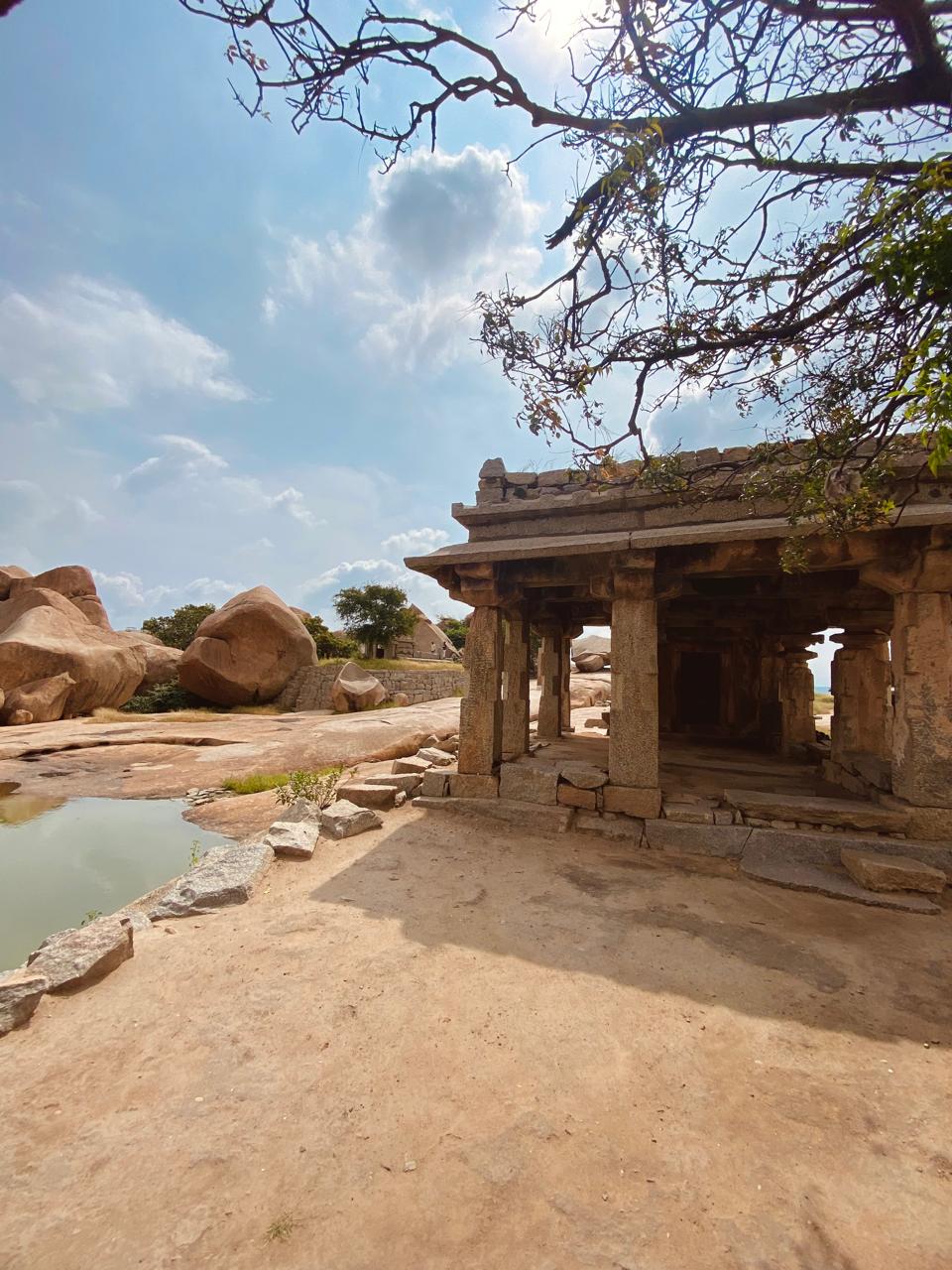
1. King Krishnadevaraya Would Walk Among Common People in Disguise
Several historical traditions and literary accounts suggest that Emperor Krishnadevaraya occasionally moved among his people in disguise to understand the true condition of the kingdom. Stories from the Vijayanagara era often describe Krishnadevaraya not merely as a powerful emperor, but as a ruler who wished to understand his people beyond palace walls, sometimes said to walk among ordinary citizens in disguise. Whether entirely factual or partly legendary, this anecdote became deeply associated with his image as a ruler close to his subjects
2. The City So Rich That Diamonds Were Sold in Open Markets
During its golden age, Hampi became famous not only for its military strength but also for its astonishing prosperity. It is said that the markets of Vijayanagara were so prosperous that precious stones and diamonds were sold openly beside ordinary goods an image almost impossible to imagine while walking through the silent ruins of Hampi today. Trade routes connected Vijayanagara to ports across the Indian Ocean, allowing the empire to flourish economically. The city’s wealth was so immense that several historians have compared it to some of the richest cities of the medieval world. Even today, while walking through the ruins of ancient marketplaces, travelers can still imagine the scale of activity that once filled these stone streets.
3. Architectural Brilliance
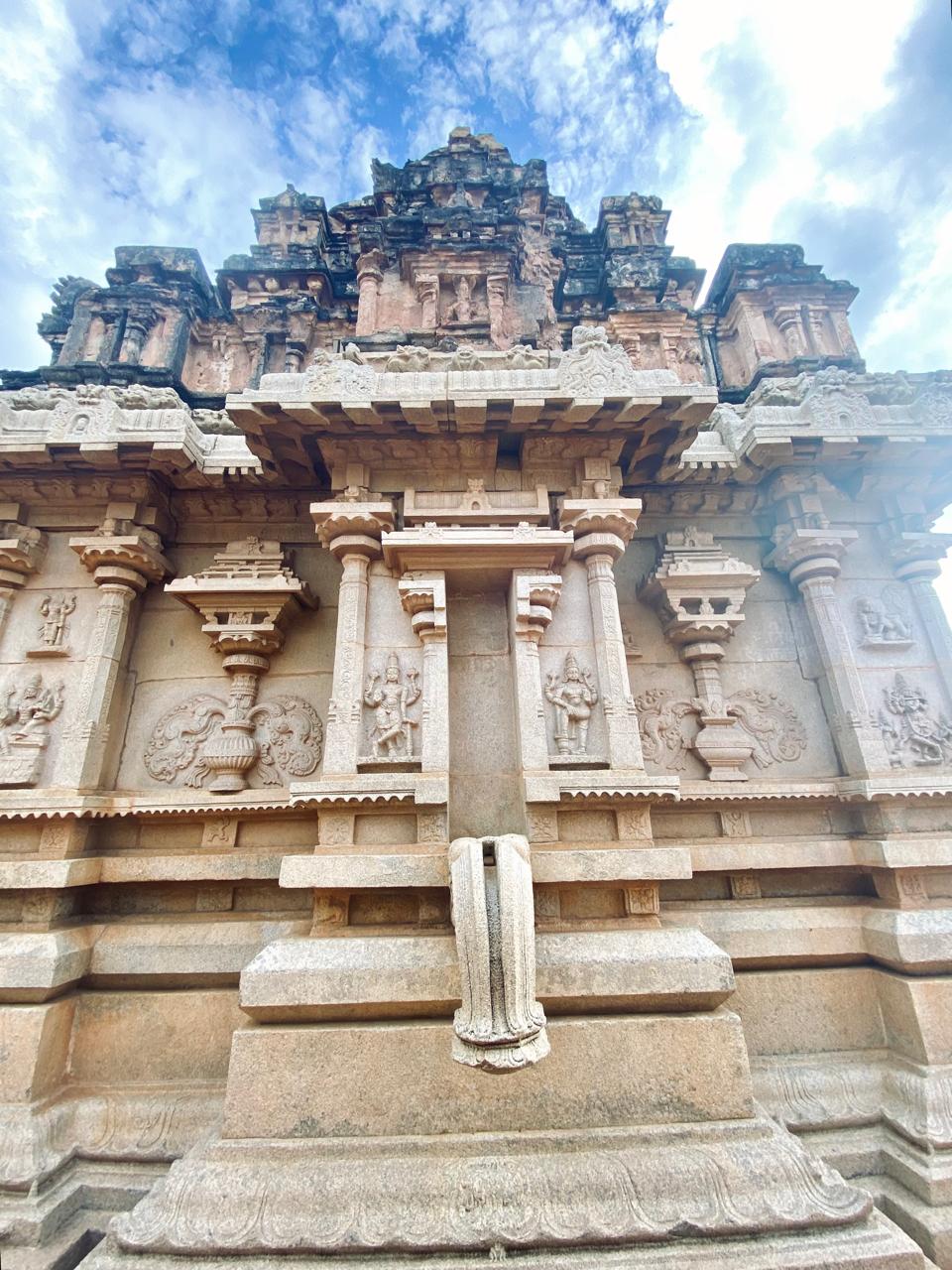
One of the most remarkable aspects of Vijayanagara era Hampi was its architectural brilliance. The empire developed a distinctive style that blended traditional South Indian temple architecture with influences from Indo-Islamic and Deccan Sultanate designs. Structures such as the Lotus Mahal and Elephant Stables demonstrate this fusion beautifully. Meanwhile, monuments like the Stone Chariot and musical pillars of Vittala Temple showcased the empire’s artistic sophistication and engineering mastery. Archaeological studies also reveal advanced water management systems, aqueducts, tanks, and canals that supported both urban life and agriculture in the dry rocky terrain surrounding Hampi.
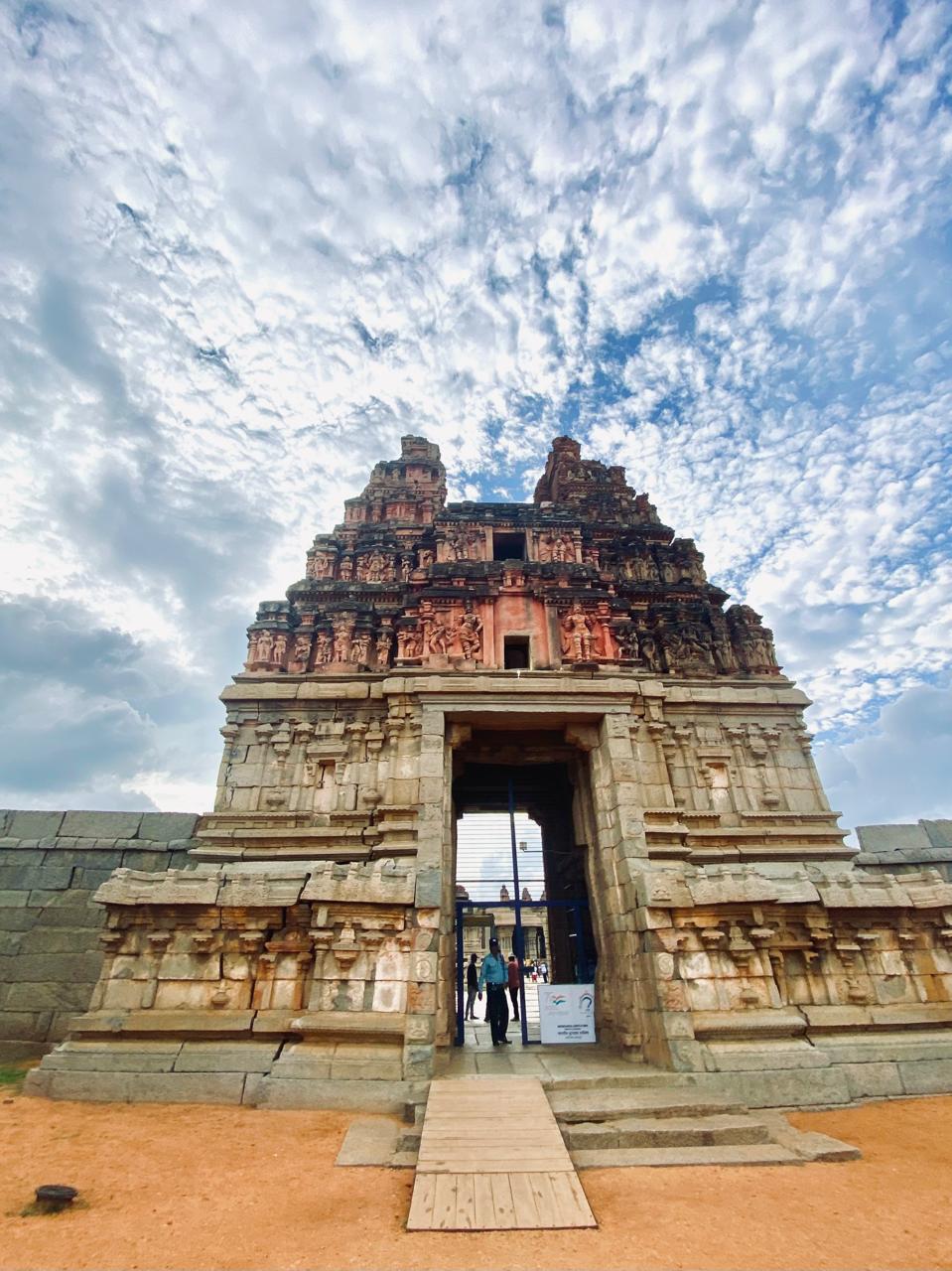
Yet beyond its monuments and wealth, this Hampi Travel Guide must also acknowledge the emotional weight of Hampi’s decline. In 1565, the empire suffered a devastating defeat at the Battle of Talikota against a coalition of Deccan Sultanates. The victorious armies entered Vijayanagara and the once-glorious capital was plundered and destroyed over several months. Temples were damaged, markets abandoned, and royal structures reduced to ruins. What remained afterward was not merely a destroyed city, but the silent remnants of one of India’s greatest civilizations.
And perhaps that is what makes Hampi unlike any other destination in India. This is not just a collection of monuments preserved in stone rather it is the memory of an empire frozen in time. Even today, while exploring the scattered ruins, royal enclosures, riverside temples, and ancient pathways through this Hampi Travel Guide, travelers do not merely witness history; they walk through the remains of a city that once stood among the grandest capitals of the medieval world. Perhaps the greatest tragedy of Hampi is that the city which once dazzled the medieval world fell silent almost overnight, leaving behind only stone, memory, and ruins scattered beneath the open sky.
Research & Further Reading Links for Your Blog
- Deccan Heritage Foundation – Unraveling the Mysteries of Hampi Vijayanagara
- IJRAR – Hampi and the Vijayanagara Empire: Urban Planning and Architecture
- Deccan Heritage Foundation – Hampi Overview
- IJRAR – The Rise and Fall of the Vijayanagara Empire
Recommended Books:
- Hampi: A Story in Stone by George Michell & John M. Fritz
- A Forgotten Empire: Vijayanagar by Robert Sewell
- The Vijayanagara Empire by K.A. Nilakanta Sastri
These are among the most respected works for readers wanting a deeper understanding of Hampi’s history, architecture, and cultural significance.
Hampi Travel Guide Essentials Planning your Trip in 2026
Where is Hampi? How to Reach there?
The road to reach Hampi is nothing short of magical integration of the history and the modern times. As you move along the road, the landscape and the terrain starts to change. The land slowly and steadily begins to reveal itself to you. Before you know, suddenly, out of nowhere, giant boulders stand tall along the road welcoming you in this ancient city. You do not enter Hampi, you step back in time right into the History of India. Nestled in the southern state of Karnataka, Hampi lies along the banks of the Tungabhadra River, near the town of Hospet (now Hosapete).
By Air: The Nearest Gateway
The closest airport to Hampi is in Hubli (around 160 km away), followed by Bengaluru (approx. 350 km).
- From Hubli, you can hire a taxi or take a bus to reach Hampi in about 3–4 hours.
- From Bengaluru, the journey takes around 6–7 hours by road or an overnight train option.
If you’re coming by air from another state then Hubli would be the ideal entry point and if you are coming from another country, Bengaluru is usually the best-connected entry point.
By Road
If you enjoy road trips, this is where the journey becomes part of the experience. Hampi is very well connected by road if you are coming by your own private car from any part of India. If you intend to use the KSRTC Government Run Transport Buses, then overnight buses from Bengaluru and Hyderabad are popular options and are economical. There are private buses also available to Hampi.
By Train
The nearest railway station is Hosapete Junction, just about 13 km from Hampi. It is well-connected to major cities like Bengaluru, Hyderabad and Goa. From Hosapete, autos, taxis, and local buses are easily available, and within 20–30 minutes, you’ll find yourself stepping into Hampi’s timeless landscape.
Best time to Visit
Hampi is open to visit 365 but the perfect season to experience its magic the way it deserves to be experienced depends on the weather. In summer, its rocky landscape glows under an unforgiving sun; during the monsoon, the ruins come alive with greenery; and in winter, the entire region feels almost dreamlike, with cool breezes drifting across ancient temples and the Tungabhadra River.
Winter (October to February) — The Best Time to Visit
If you’re planning a trip in 2026, this is undoubtedly the ideal season to explore Hampi.
- Pleasant temperatures ranging between 15°C to 30°C
- Comfortable weather for sightseeing, hiking, and cycling
- Perfect for sunrise and sunset views from hills like Matanga Hill
- Ideal for exploring ruins without exhaustion
This is also when Hampi feels the most alive. Cafés buzz with travelers, coracle rides drift peacefully along the Tungabhadra, and golden sunlight makes the ancient stone monuments look almost cinematic.
Monsoon (July to September) — The Most Scenic Season
Monsoon transforms Hampi completely. Dry brown landscapes suddenly turn lush green, and the contrast between rain-washed boulders and ancient temples creates an atmosphere that feels almost mystical.
- Cooler weather compared to summer
- Fewer crowds
- Stunning photography opportunities
However, occasional heavy rains can make exploration slightly difficult, especially around rocky trails and riverbanks.

Summer (March to June) — Beautiful but Harsh
Summer in Hampi can be intense, with temperatures often crossing 40°C. The rocky terrain absorbs heat quickly, making daytime exploration exhausting.
Still, if you visit during this time:
- Start sightseeing early in the morning
- Explore indoor temples during afternoon hours
- Enjoy quieter monuments with fewer tourists.
This Hampi Travel Guide recommends:
While every season reveals a different side of Hampi, winter remains the most rewarding time to experience its timeless charm. The cooler weather allows you to slow down, wander through centuries-old ruins, climb sunlit hills, and truly absorb the atmosphere of a place where mythology, history, and landscape come together in extraordinary harmony.
Where to stay in Hampi?
Your stay location is a major part of experience in Hampi and can shape the entire plan. Depending upon your vibe you can choose the stay. This Hampi Travel Guide can help you plan your stay as per your budget and likes
| Sr. No. | Traveller Type | Area to stay | Nearby spots |
| 1. | First time Visitor | Hampi Bazaar area | Virupaksha Temple, Hampi Bazaar, Cafes, Hemakuta Hills etc. |
| 2. | Solo Travellers | Hippie Island / Virapapur Gadde | Riverside Cafe, Hostel Culture, Boulder Landscapes and scenic paddy fields |
| 3. | Family / Luxury, Comfortable Stay | Hosapete | Easier transport connectivity, Air-Con Family Friendly stays, Better Hotels and Resorts |
| 4. | Couples, slow travelers, writers, remote workers | Outskirts of Hampi | Scenic sunrise views, Traditional Karnataka-style hospitality, Quiet, nature-focused experiences |
Top attractions in Hampi: A complete Hampi Travel Guide
Hampi, the erstwhile capital of the Vijayanagara Empire located in the Ballari District of Karnataka, is a site of immense historical, cultural, and architectural significance, embodying a unique synthesis of Hindu traditions, art, and mythology. It comprises a multitude of invaluable monuments, including but not limited to the Virupaksha Temple, the Vittala Temple with its iconic Stone Chariot, the Royal Enclosure, the Lotus Mahal, and the Elephant Stables, all set within a surreal and dramatic landscape defined by the Tungabhadra River and granite boulders. The spiritual and historical atmosphere of sites like Matanga Hill, Anjanadri Hill, and Hemakuta Hill is an integral part of this heritage.
In recognition of its unique cultural significance, it was inscribed as a UNESCO World Heritage Site in 1986.
Hampi is not merely a collection of monuments but a living cultural landscape where history, mythology, and nature are inextricably intertwined.
VIRUPAKSHA TEMPLE
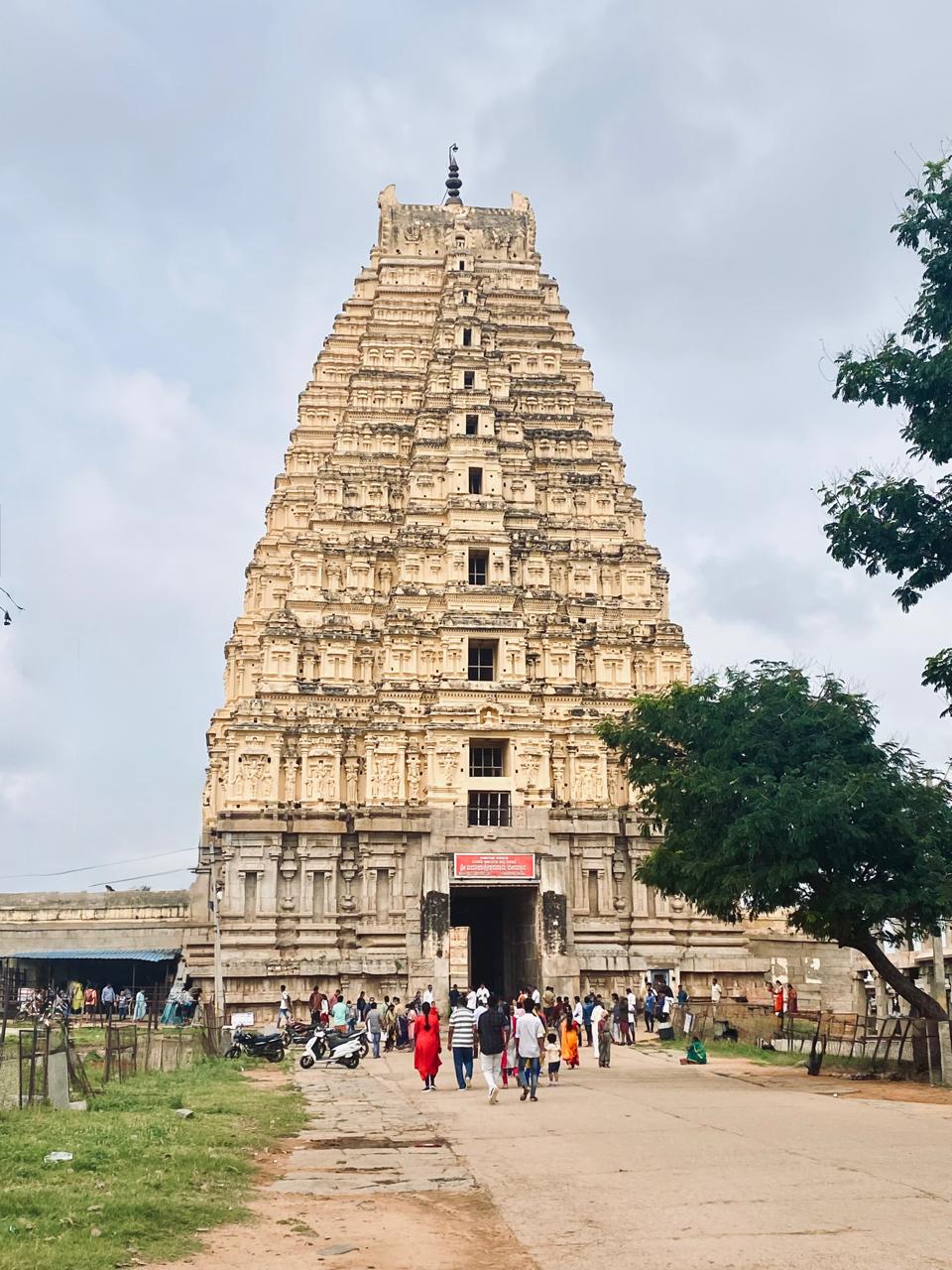
The spiritual heart of Hampi, an ancient and functioning temple that predates the Vijayanagara Empire, forming the core of Hampi’s sacred identity. Dedicated to Lord Shiva in the form of Virupaksha, the temple predates even the Vijayanagara Empire and remains deeply connected to the legends of Pampa and Shiva, making it a vital pilgrimage site. Its towering gopuram, intricate carvings, and the palpable atmosphere of devotion draw not only worshippers but also those seeking to understand the enduring spiritual traditions of India. The daily rituals, the panoramic view of Hemakuta Hill from its complex, and the fascinating pinhole camera phenomenon within its walls offer a profound introduction to Hampi’s sacred identity and its living heritage.
VITTHALA TEMPLE AND STONE CHARIOT
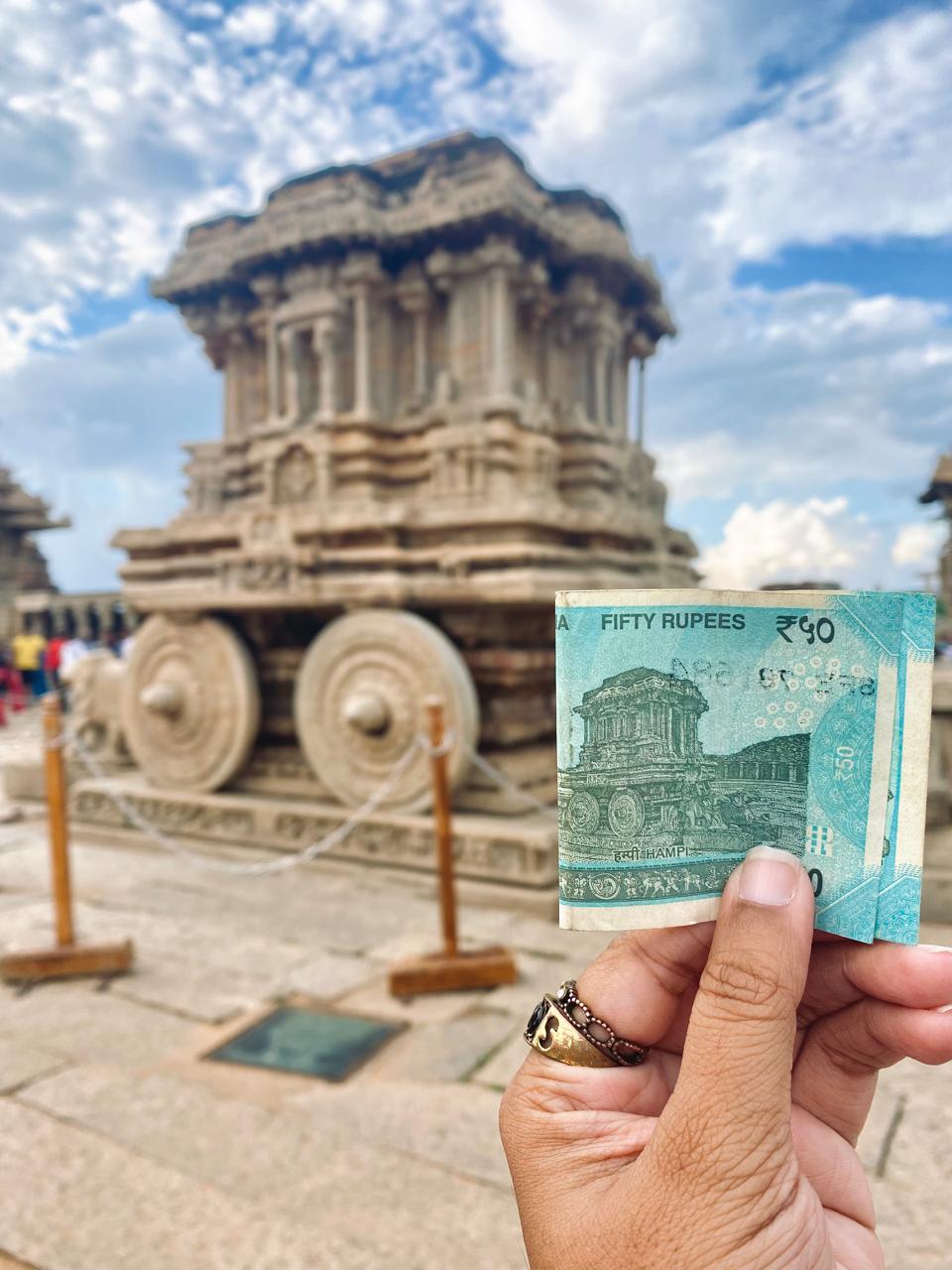
Widely regarded as the architectural masterpiece of Vijayanagara craftsmanship, the Vittala Temple complex is Hampi’s most iconic landmark. The legendary stone chariot, a marvel of engineering and artistry, symbolizes the pinnacle of the empire’s artistic ambition. The famous musical pillars, which resonate with melodic tones when gently tapped, continue to astound visitors, showcasing the advanced acoustic knowledge of the builders. Its massive courtyards and intricate carvings narrate tales of a bygone era, making it a magnet for architects, historians, and art lovers who wish to witness the zenith of ancient Indian temple architecture.
ROYAL ENCLOSURE
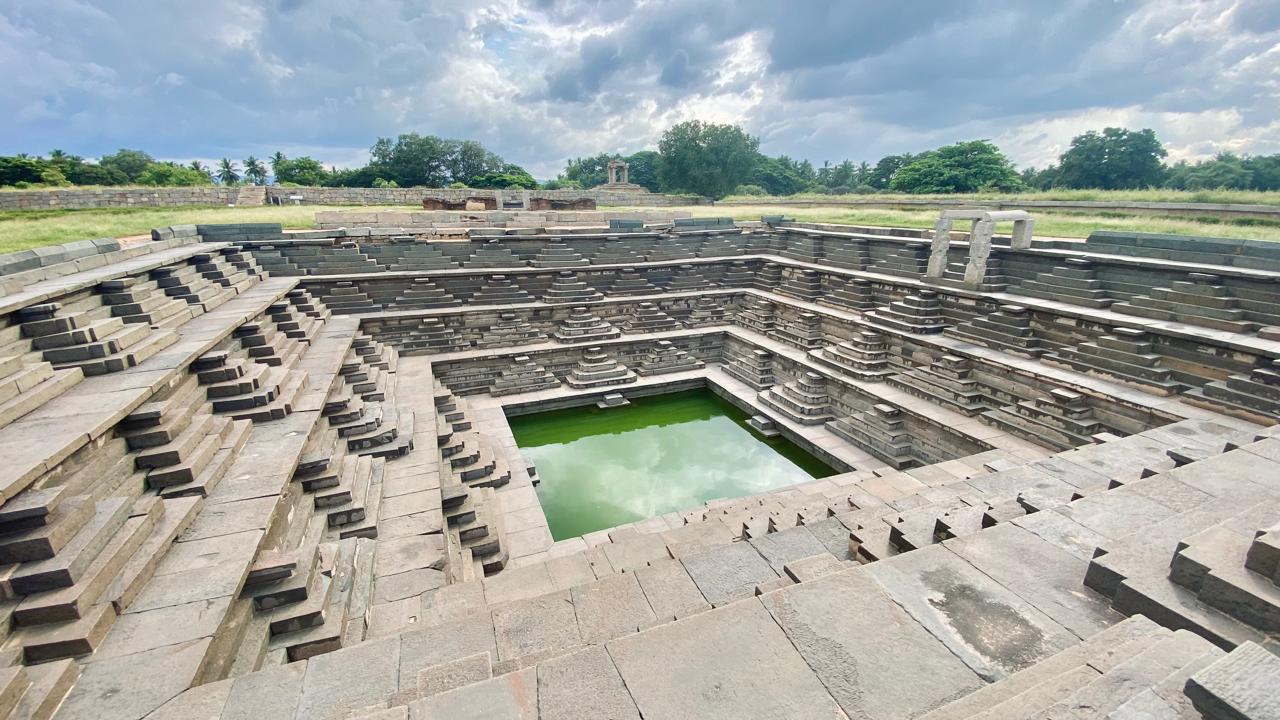
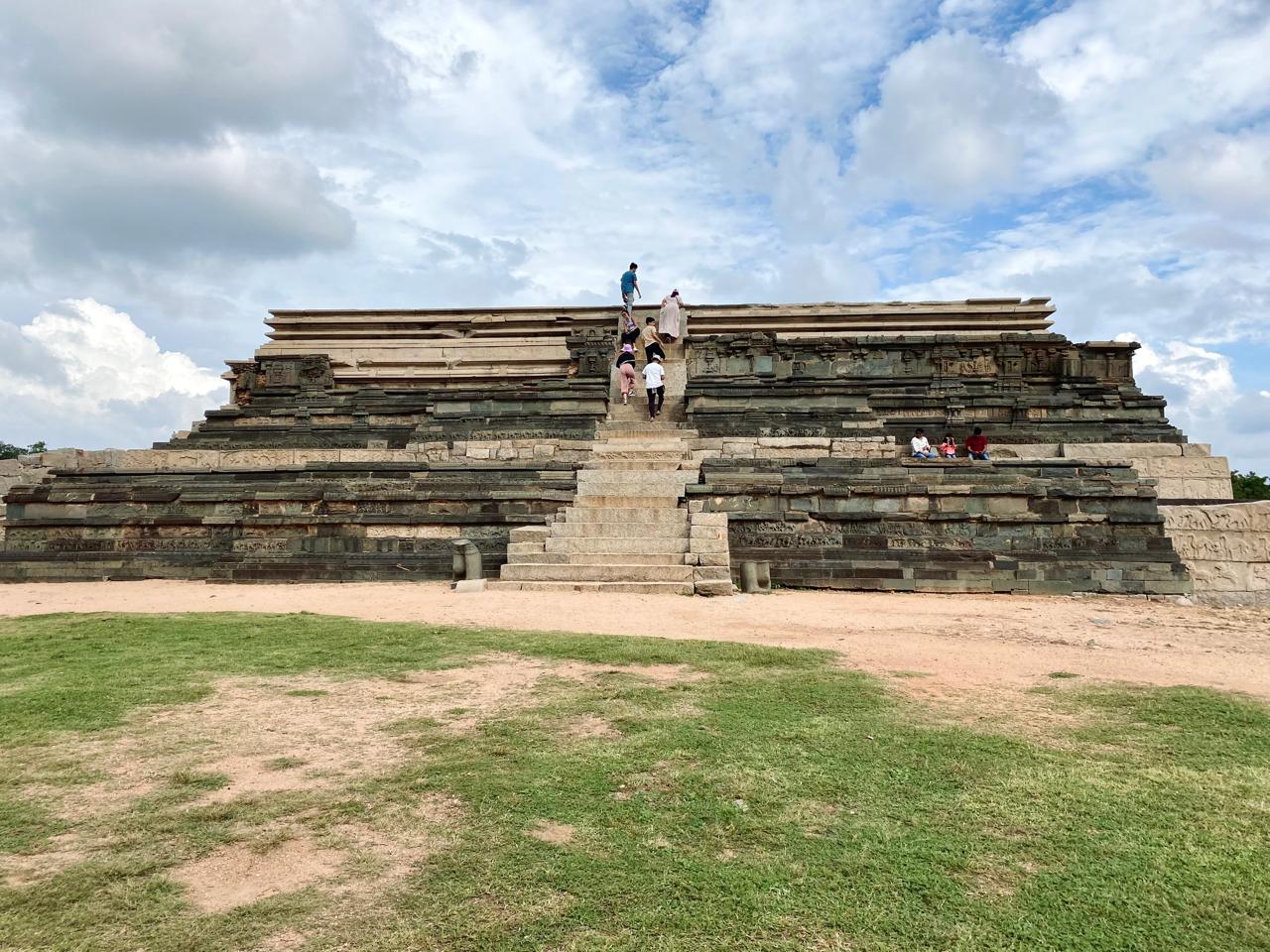
The erstwhile political centre, its ruins, including audience halls and ceremonial platforms, speak of the empire’s administrative might. Once the vibrant political and administrative heart of the Vijayanagara Empire, the Royal Enclosure offers a tangible glimpse into the grandeur and sophisticated governance of its rulers. Though much of it now lies in ruins, the scale of its audience halls, the mystery of its underground chambers, and the remnants of platforms used for elaborate royal ceremonies still evoke the immense power and majesty of the empire. Visitors are drawn here to imagine the daily life, political intrigues, and ceremonial splendor that once unfolded within these hallowed grounds, providing a crucial historical context to the empire’s might.
SACRED HILLS AND RIVER
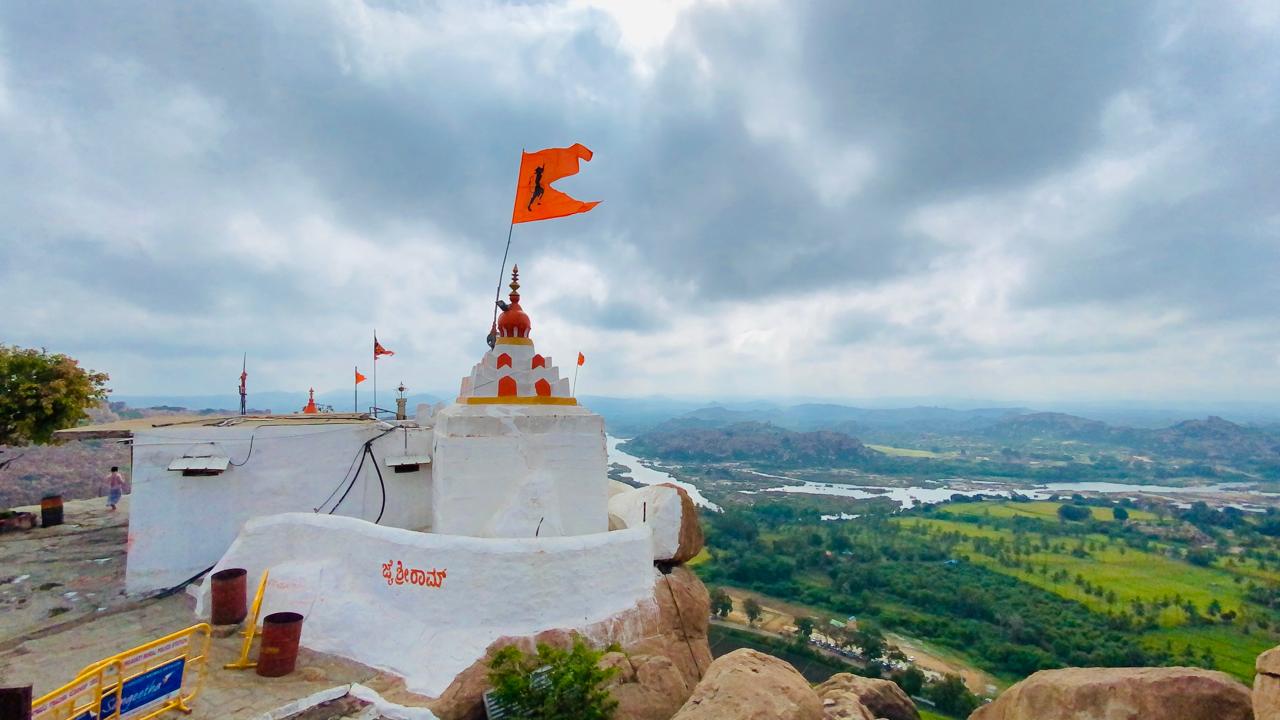
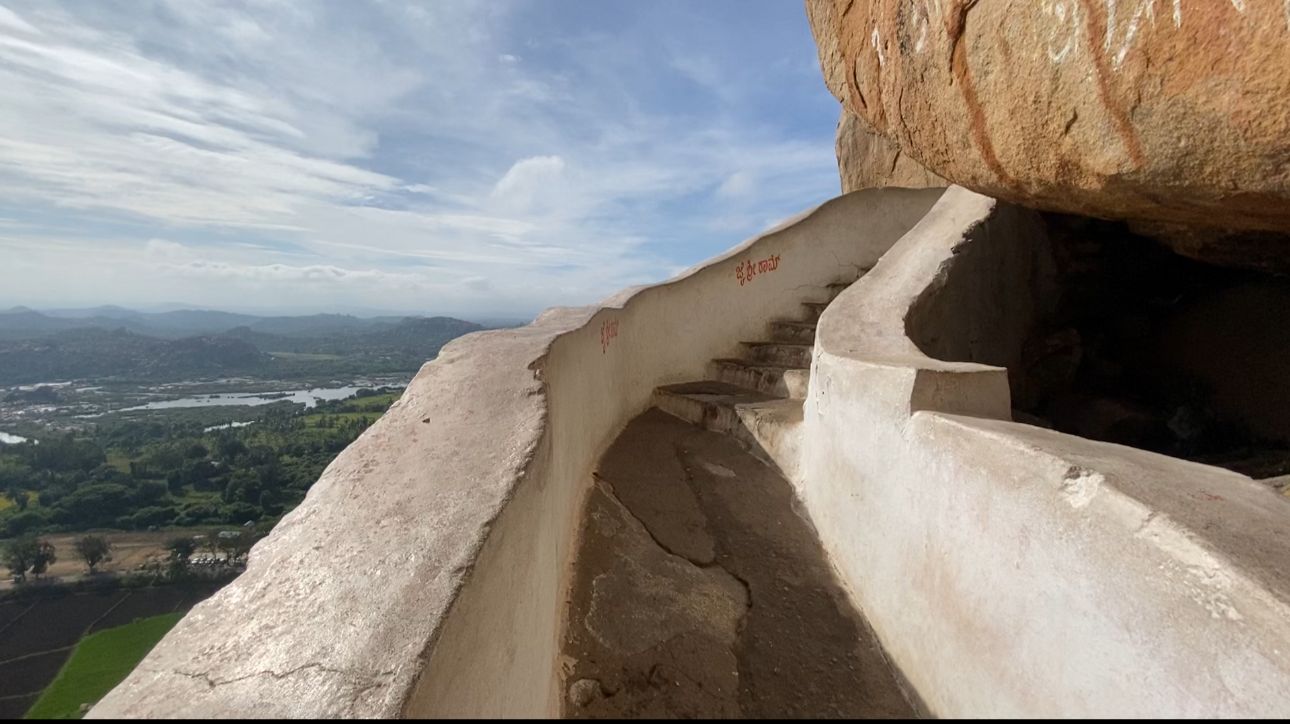
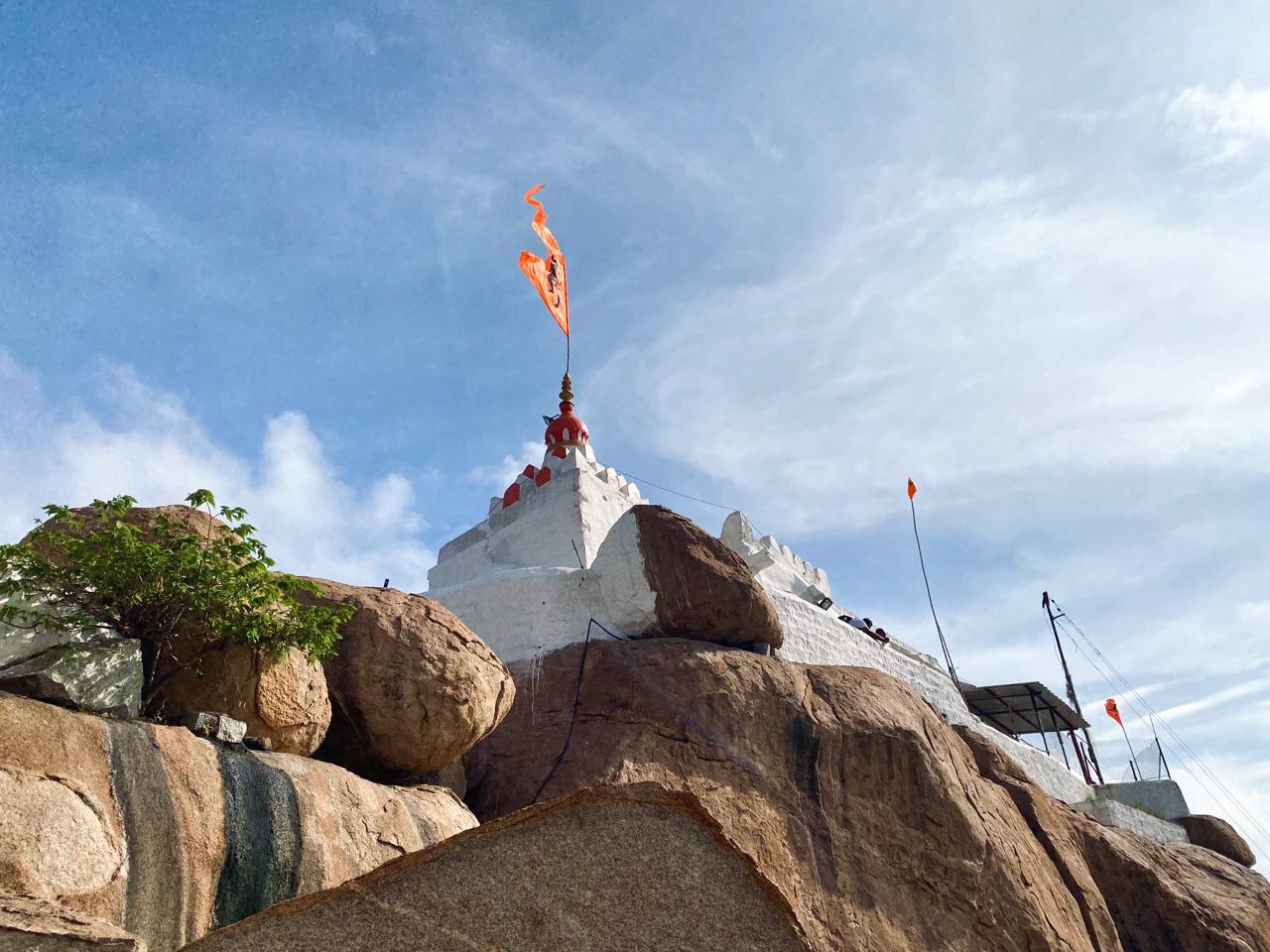
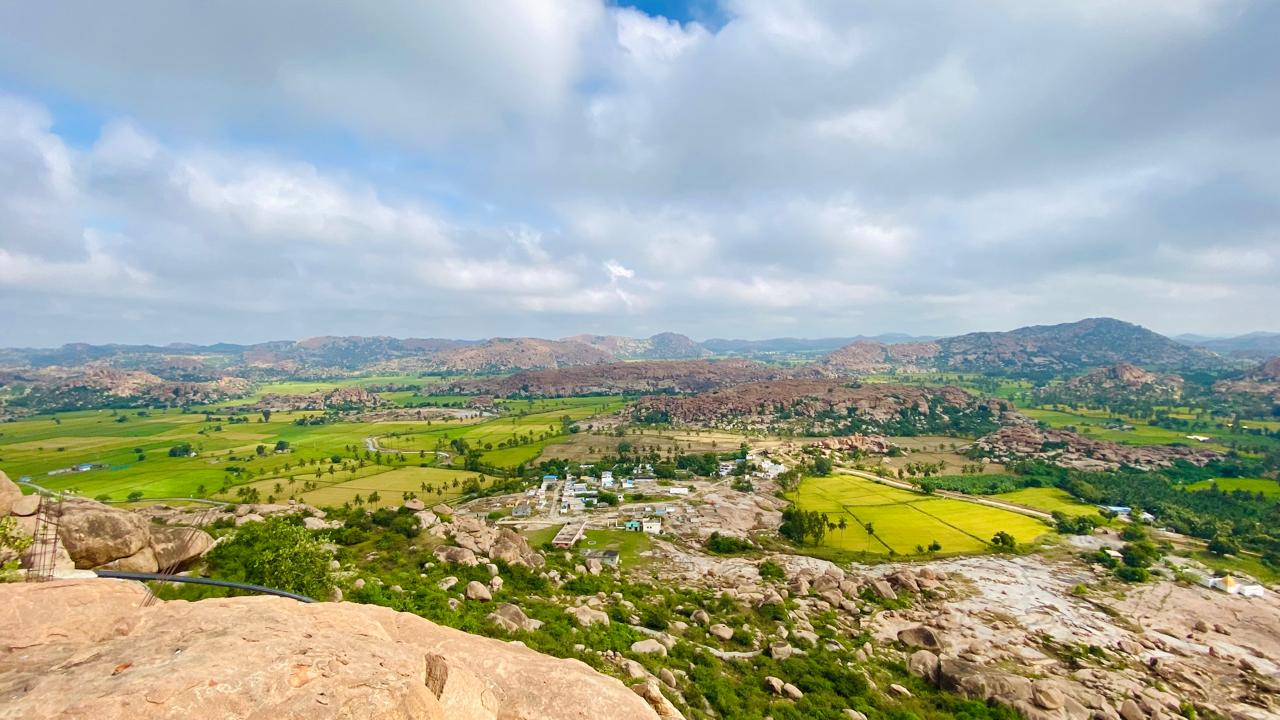
The landscape of Hampi is dramatically dotted with sites of immense mythological importance, each offering a unique perspective and spiritual resonance. Matanga Hill, renowned for offering the most unforgettable sunrise views, allows visitors to grasp the sheer scale and surreal beauty of Hampi as the first rays illuminate the boulder-strewn terrain, ruins, and river valleys. Anjanadri Hill, traditionally believed to be the birthplace of Lord Hanuman, attracts pilgrims and adventurers alike, offering breathtaking sunset views over a landscape of banana plantations and giant boulders, seemingly untouched by time. Hemakuta Hill provides a calmer sunset experience amidst ancient temple ruins, fostering a meditative atmosphere.
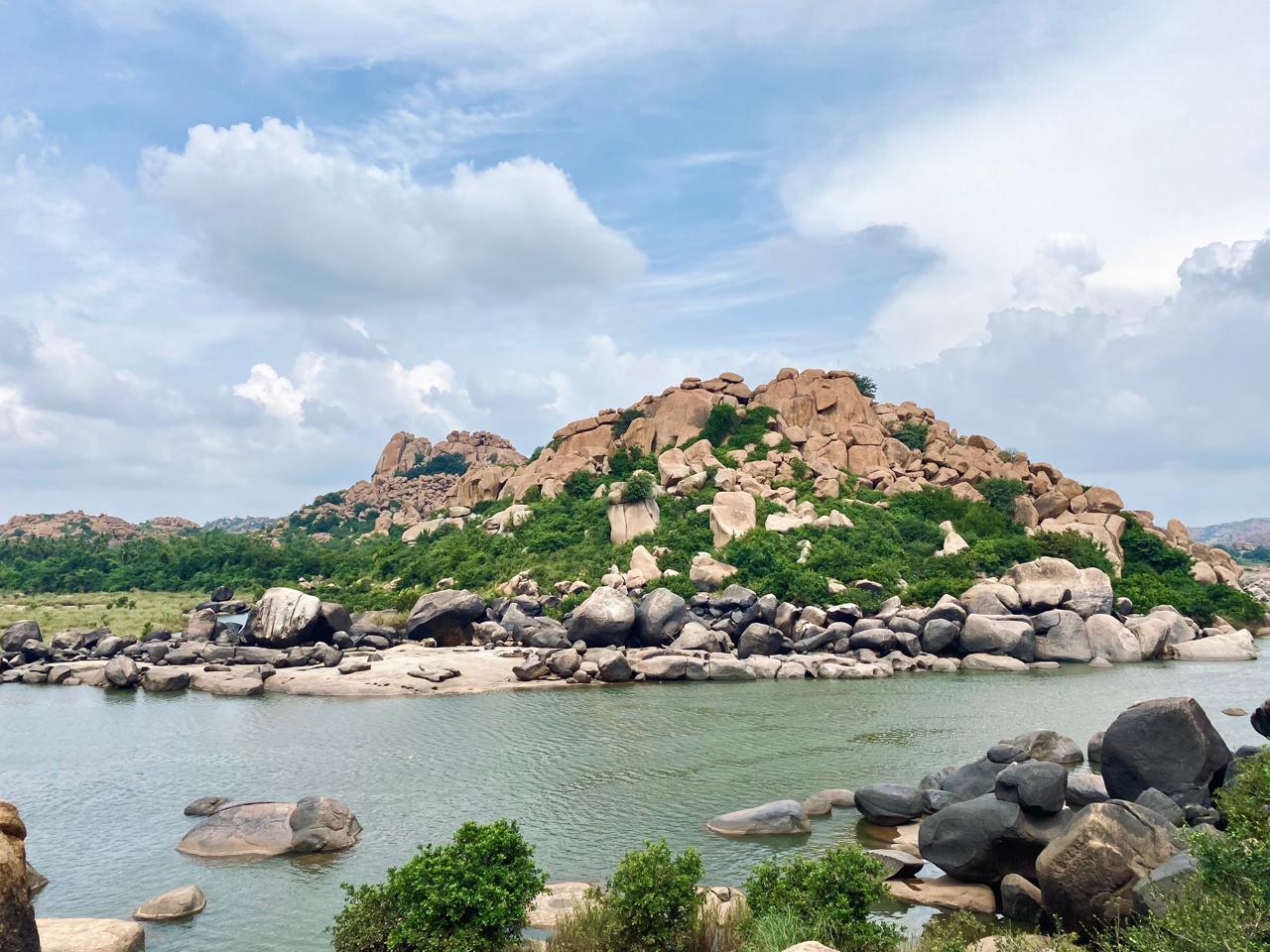
The Tungabhadra River, often referred to as the soul of Hampi, is not merely a geographical feature but a sacred entity. Traditional coracle rides on its tranquil waters offer a unique, serene perspective, drifting past ancient ruins, riverside shrines, and impossibly balanced boulders, connecting visitors intimately with the natural and historical fabric of the site. These natural and mythological sites are crucial for understanding the holistic experience of Hampi, attracting spiritual seekers, nature enthusiasts, and photographers.
ARCHITECTURAL GEMS
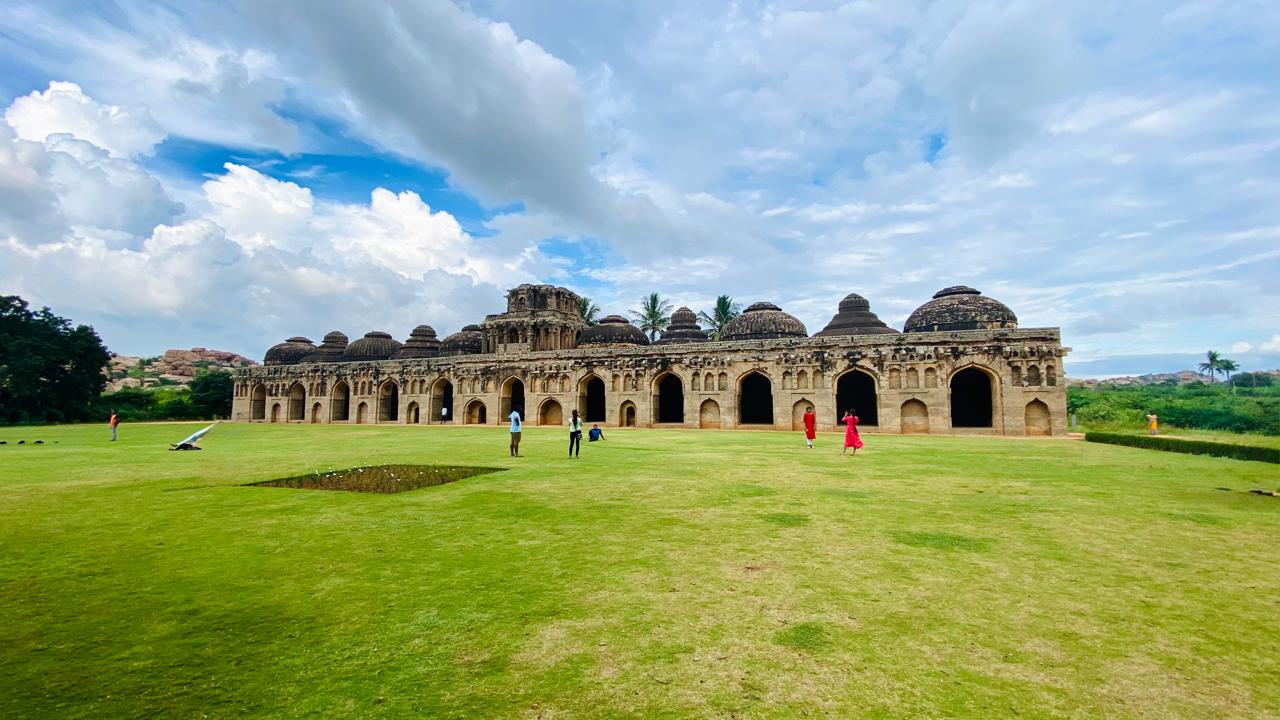
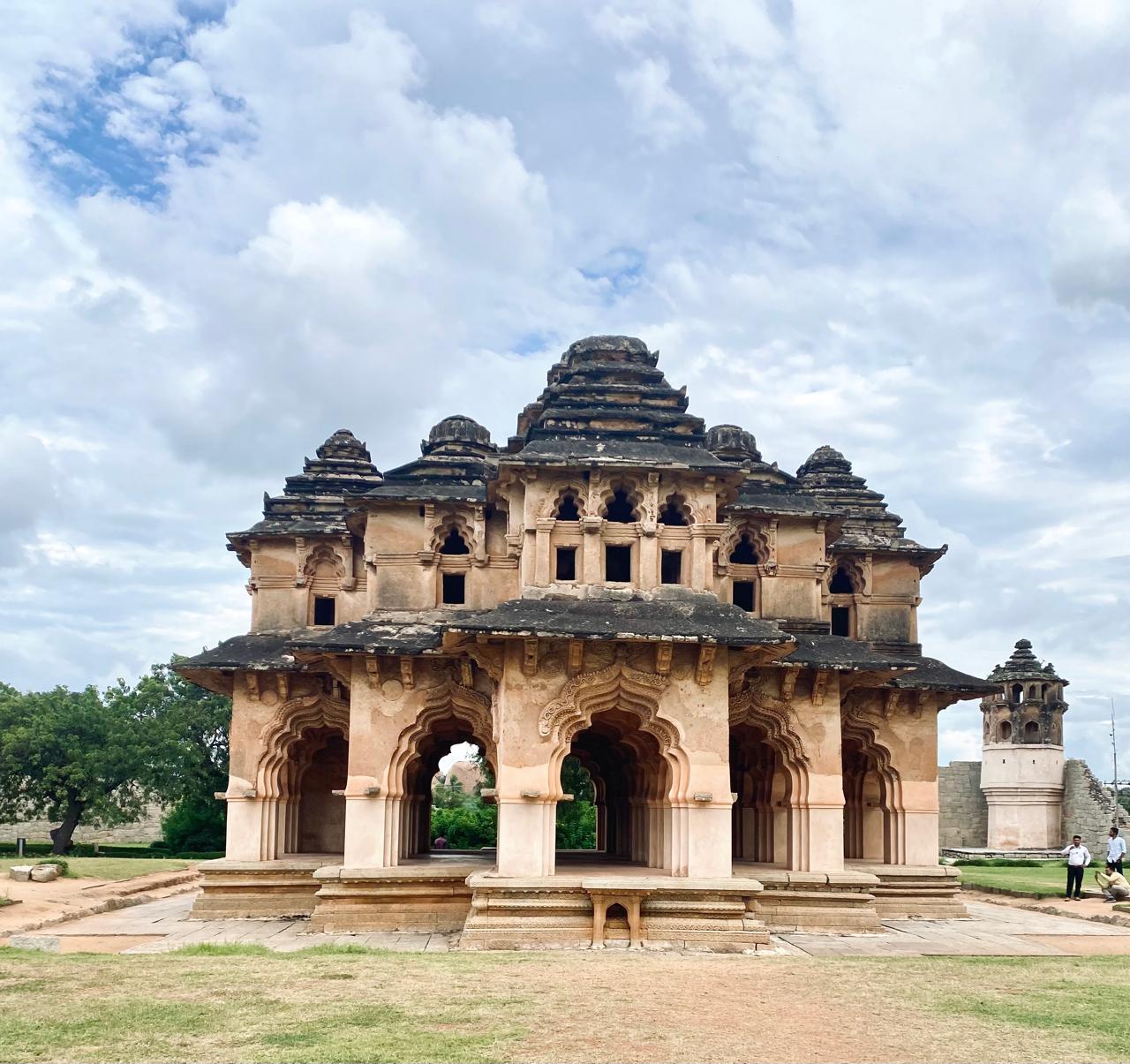
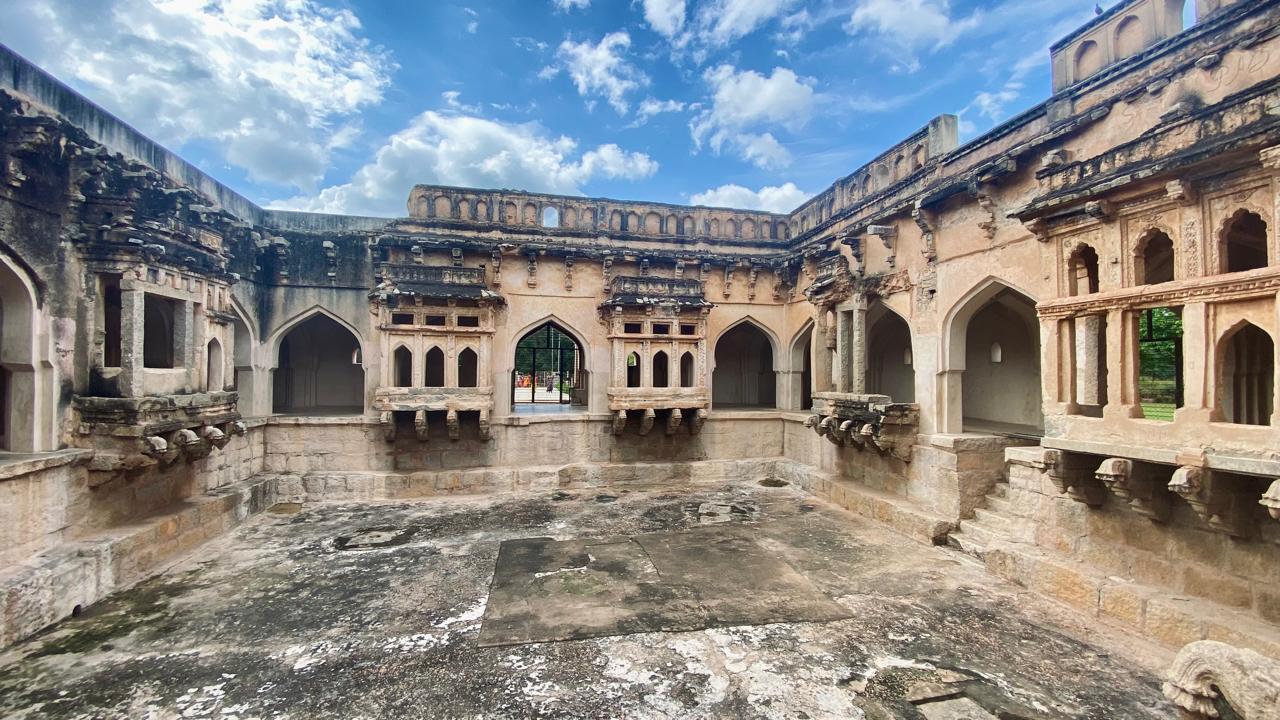
Beyond the grand temples, Hampi boasts unique architectural gems that highlight the diverse influences and sophisticated planning of the Vijayanagara era. The elegant Lotus Mahal, with its distinctive Indo-Islamic design influences and symmetrical beauty, stands out from the predominantly Dravidian temple architecture. Located within the Zenana Enclosure, it is believed to have served as a recreational or meeting space for royal women and remains one of Hampi’s most photogenic monuments. Similarly, the massive Elephant Stables, with their domed chambers and impressive symmetry, demonstrate how even utilitarian structures were imbued with architectural sophistication, reflecting the empire’s meticulous planning and aesthetic sensibilities. These structures attract those interested in comparative architecture and the nuanced cultural exchanges of the period.
The collective allure of these sites ensures that Hampi is not merely a destination for historical study but a profound journey through a lost civilization, where every ruin, river, and hill narrates a compelling story.
How to explore Hampi like a Pro
Exploring Hampi is exploring history. It is very different from exploring a typical city. There are no tall skyscrapers, shopping streets, or traffic here. Hampi unfolds slowly. Its ancient ruins can be found into each and every nook and corner of the complex. At times hidden between banana plantations, temple courtyards, riverbanks, and giant boulders that seem almost unreal. And the truth is the best way to exploring Hampi like a pro is exploring through it slowly but steadily.
1. Rent a Scooter
If there’s one thing that instantly changes your Hampi experience, it’s renting a scooter. With monuments spread across different zones, scooters give you the freedom to explore at your own pace. The average cost of rental is ₹300–₹500 per day. This allows you to easily access the hidden spots and sto anywhere for photos or sunsets.
The roads around Hampi are scenic, quiet, and surrounded by dramatic landscapes, making the ride itself part of the experience.
Pro Tip: Start early in the morning before the heat intensifies.
2. Explore Short Distances by Bicycle
For travelers who enjoy slow travel along with some exercise, cycling through Hampi can feel magical. Pedaling past ancient stone mandapas, quiet village roads, and lush paddy fields creates a much deeper connection with the landscape than simply driving past it. The area best explored by bicycle:
- Hampi Bazaar area
- Riverside ruins
- Hemakuta Hill surroundings
3. Some Parts of Hampi Are Best Explored on Foot
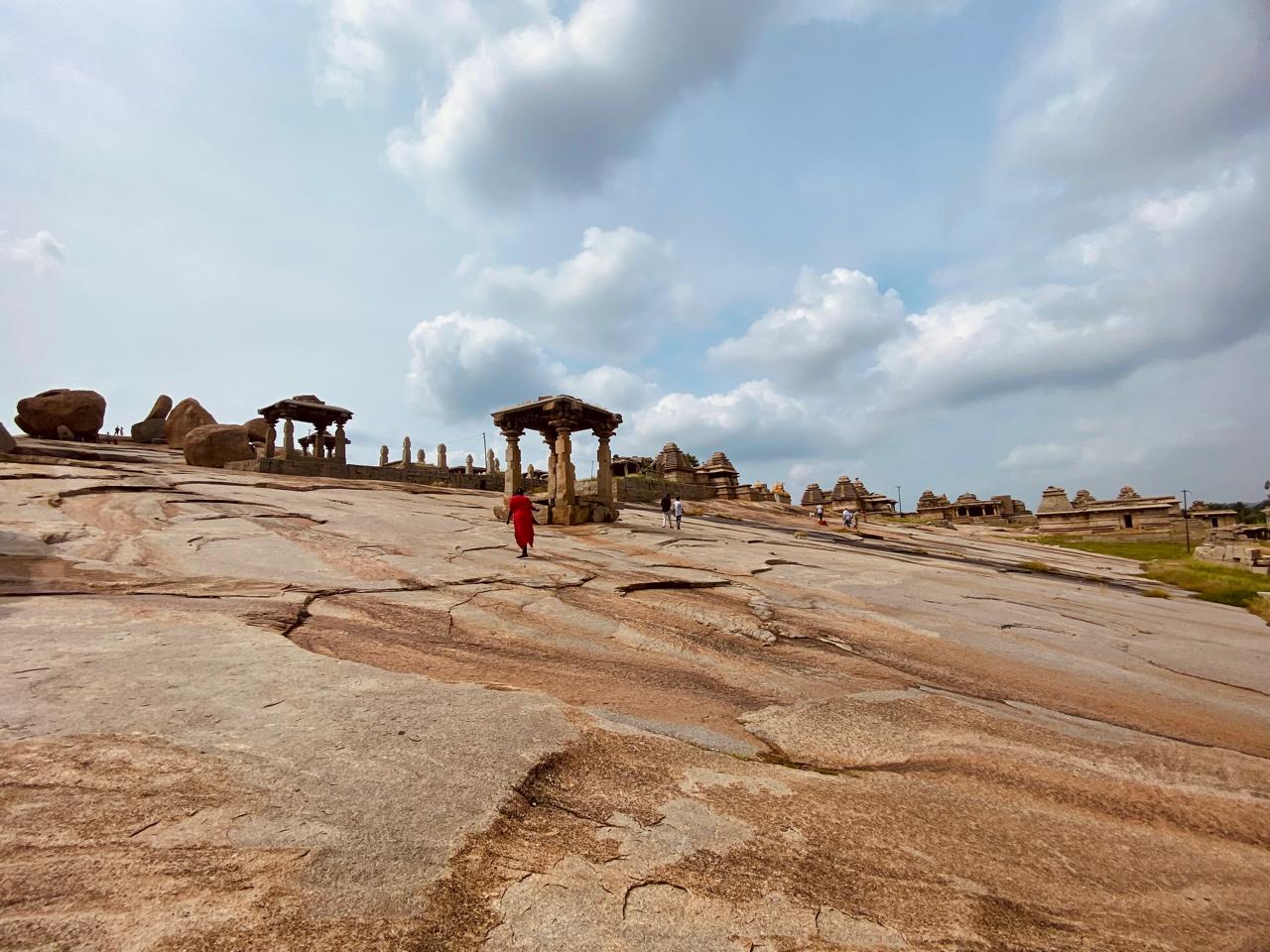
Certain experiences in Hampi simply cannot be rushed. Therefore areas like:
- Virupaksha Temple surroundings
- Hemakuta Hill
- Royal Enclosure
…are best explored slowly and on foot.
4. Plan Your Day Around Sunrise & Sunset
Hampi changes dramatically with light.
- Sunrise: Soft golden light over temples and boulders
- Afternoon: Harsh heat, best for indoor exploration or cafés
- Sunset: Warm tones transform the ruins into something cinematic
Best sunrise spot: Matanga Hill
Best sunset spots: Hemakuta Hill, Anjanadri Hill
5. Divide Hampi Into Zones
Trying to cover everything in one day can become exhausting. The smarter way is to explore Hampi zone wise. This Hampi Travel Guide suggests you to split the 3 days as follows:
- Sacred Centre: Virupaksha Temple, Hemakuta Hill, riverside ruins
- Royal Centre: Lotus Mahal, Elephant Stables, Royal Enclosure
- Across the River: Anjanadri Hill, cafés, coracle rides
This makes the journey smoother and less rushed.
6. Carry Essentials
Hampi’s beauty comes with rugged terrain and strong sunlight. Always carry:
- Water bottle
- Sunglasses & sunscreen
- Comfortable footwear
- Light cotton clothing
The Secret to Experiencing Hampi Properly
The biggest mistake travelers make in Hampi is treating it like a checklist of monuments. Hampi is not meant to be “covered” on a target basis but it is meant to be experienced. Because the real magic of Hampi often lies not in the famous landmarks, but in the moments between them.
MUST TRY Food in Hampi
Much like its ruins and legends, the food culture of Hampi carries layers of history, simplicity, and unexpected diversity. Tasting region’s local food is a delicious way to learn about the culture of the area and this Hampi Travel guide has tried to do exactly that. The cuisine here is deeply influenced by the flavours of North Karnataka viz. simple, hearty, mildly spiced, and rooted in local produce. You can try the following things while in Hampi:
1. Jolada Rotti
Jolada Rotti is a soft flatbread made from jowar (sorghum), usually served with spicy curries, chutneys, or lentils. It is one of the most authentic dishes in the region and its staple food. This dish is in existence since centuries and reflects the dry agricultural landscape of the region.
2. Ennegayi
A famous North Karnataka dish made with stuffed brinjals cooked in a rich peanut and spice gravy. This dish has to be eaten along with Jolada Rotti or Rice.
3. Banana Based Dishes
Since the region around the Tungabhadra River is filled with banana plantations, fresh bananas and banana-based snacks are common throughout Hampi.
4. Rice based Dishes
Rice based dishes are found commonly around Hampi. Bisi Bele bath is the most common and simple rice and lentil preparation. It is cooked with vegetables and aromatic spices, remains one of Karnataka’s most loved dishes.
Hampi’s food scene carries the simplicity of village life, the richness of Karnataka’s culinary traditions, and the influence of centuries of travelers and empires who passed through this historic land. In Hampi, even food feels connected to the story of the place itself.
Budgeting Your Trip: Hampi Travel Guide Cost Breakdown
One of the best things about Hampi is that it can be experienced beautifully on almost any budget. Whether you are a backpacker, a couple or a family planning a comfortable heritage getaway, this Hampi Travel Guide proves that exploring one of India’s most extraordinary historical destinations does not necessarily have to be expensive.
Unlike many commercial tourist destinations, Hampi still retains a raw and relatively budget-friendly charm. From scooter rentals and homestays to traditional Karnataka meals and temple visits, most experiences here remain surprisingly affordable, making this Hampi Travel Guide especially useful for travelers who want both adventure and value.
All major costs in This Hampi Travel Guide
| Type of Stay | Approximate Cost Per Night |
|---|---|
| Budget Hostels / Guesthouses | ₹500 – ₹1,200 |
| Mid-Range Hotels | ₹1,500 – ₹3,500 |
| Boutique Stays / Resorts | ₹4,000 – ₹10,000+ |
Areas like Hampi Bazaar and Virupapur Gadde are popular for budget stays, while Hosapete offers more comfortable hotel options.
| Mode of Transport | Approximate Cost |
|---|---|
| Scooter Rental | ₹300 – ₹500/day |
| Bicycle Rental | ₹100 – ₹300/day |
| Auto Rickshaw | ₹100 – ₹800 depending on distance |
| Coracle Ride | ₹200 – ₹500 |
Renting a scooter remains the best way to explore Hampi comfortably.
The food scene in Hampi suits every budget, which is another reason why this Hampi Travel Guide is ideal for backpackers and long-term travelers.
| Meal Type | Approximate Cost |
|---|---|
| Local South Indian Breakfast | ₹50 – ₹150 |
| Karnataka Thali | ₹150 – ₹300 |
| Café Meals | ₹200 – ₹500 |
| Coffee / Snacks | ₹50 – ₹200 |
Traditional Karnataka meals are usually more affordable than international café menus.
Many of the ruins around Hampi can be explored freely, though some major monuments require tickets.
Estimated Daily Budget (Per Person)
| Travel Style | Estimated Daily Cost |
|---|---|
| Budget Backpacker | ₹1,000 – ₹2,000 |
| Mid-Range Traveler | ₹3,000 – ₹6,000 |
| Luxury Traveler | ₹8,000+ |
The estimated costs mentioned in this Hampi Travel Guide are approximate daily expenses intended to give travelers a general idea of on-ground spending within Hampi. These estimates does not include Guide Charges, Travel to & Fro Hampi, Personal Expenses, Medical expenses, Seasonal price surges during festivals or holidays. For the most accurate planning, it is always advisable to keep an additional buffer amount for unexpected expenses and peak-season price fluctuations.
Why Hampi should be on your travel bucket list for 2026 and How this Hampi Travel Guides lets you achieve it?
If there is one destination in India that deserves a place on every traveler’s bucket list in 2026, it is undoubtedly Hampi. Unlike ordinary tourist destinations, Hampi is not merely a place you visit but it is a place you experience. From ancient temple ruins and surreal boulder landscapes to stories from the Ramayana and the grandeur of the Vijayanagara Empire, every corner of Hampi feels like stepping into another era. This is exactly why a well-planned Hampi Travel Guide becomes essential for anyone wanting to explore the destination beyond just sightseeing.
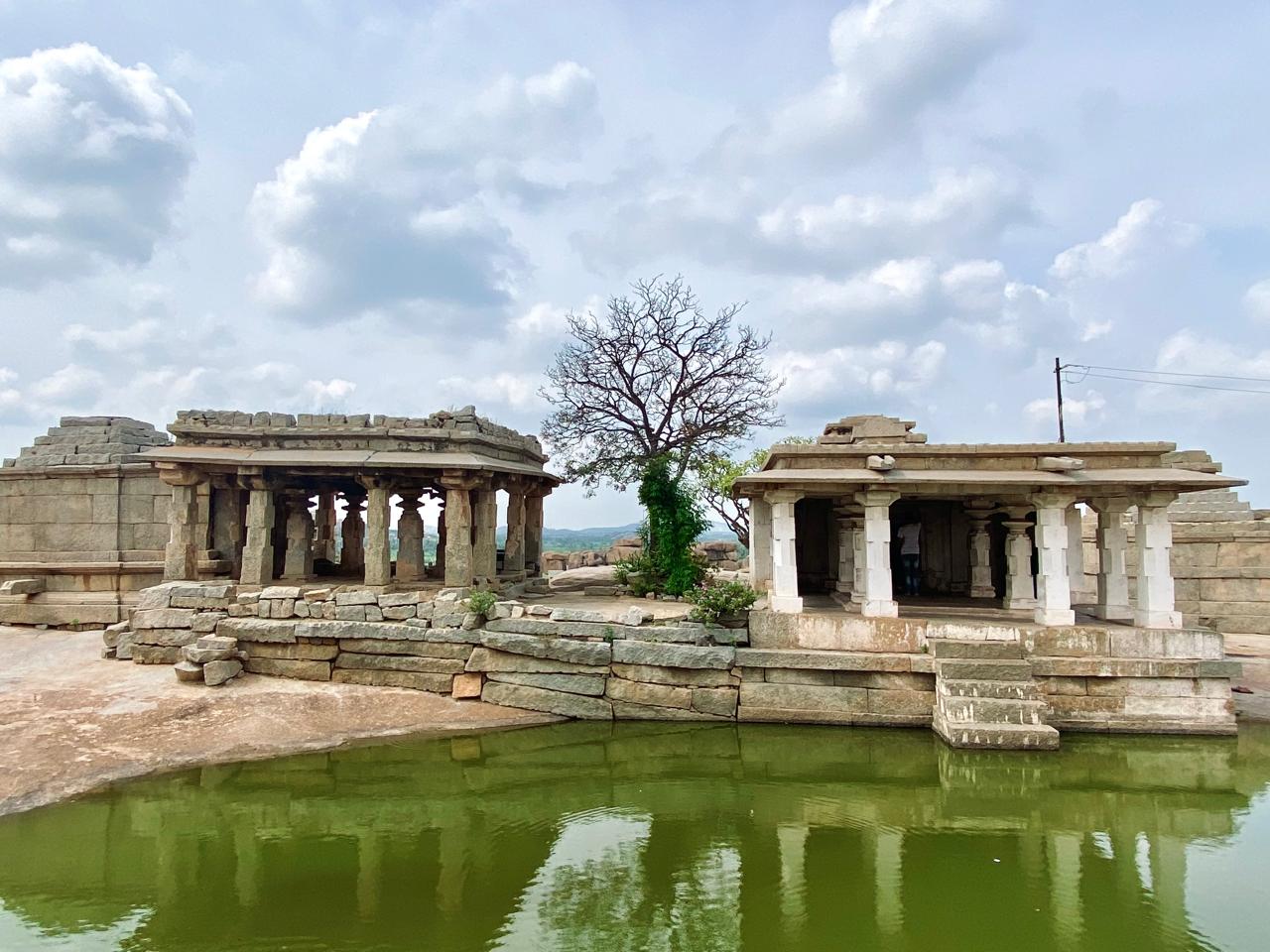
This Hampi Travel Guide is designed to help travelers understand every layer of Hampi, from its mythological roots connected to Rama, Hanuman, and Kishkindha, to its historical transformation into one of the richest cities in the medieval world. Beyond history, this Hampi Travel Guide also helps travelers discover practical aspects of the journey such as where to stay, how to travel around Hampi, the best hidden viewpoints, authentic Karnataka food, café culture, budgeting tips, and the ideal time to visit Hampi in 2026.
In 2026, when travelers are increasingly searching for meaningful journeys rather than just vacations, Hampi stands apart as a destination that offers depth, wonder, and timelessness. And with the help of this detailed Hampi Travel Guide, travelers can experience Hampi not merely as tourists, but as explorers stepping into one of India’s most extraordinary historical and mythological landscapes.